Open any kitchen drawer in the world, and you will find one. It is stained with tomato sauce, slightly burned on the handle, and feels smooth to the touch.
The wooden spoon is the most common tool in human history. But because it is so common, we ignore it.
We shouldn’t. That simple piece of wood holds secrets involving courtship rituals, bacterial warfare, and the University of Cambridge. It is a tool that defies modern science by being safer than plastic and more durable than metal.
Here are the interesting stories behind the spoon.
1. The Romantic Origin of “Spooning”
Have you ever wondered where the romantic term “spooning” (cuddling) comes from? It comes from woodcarving.
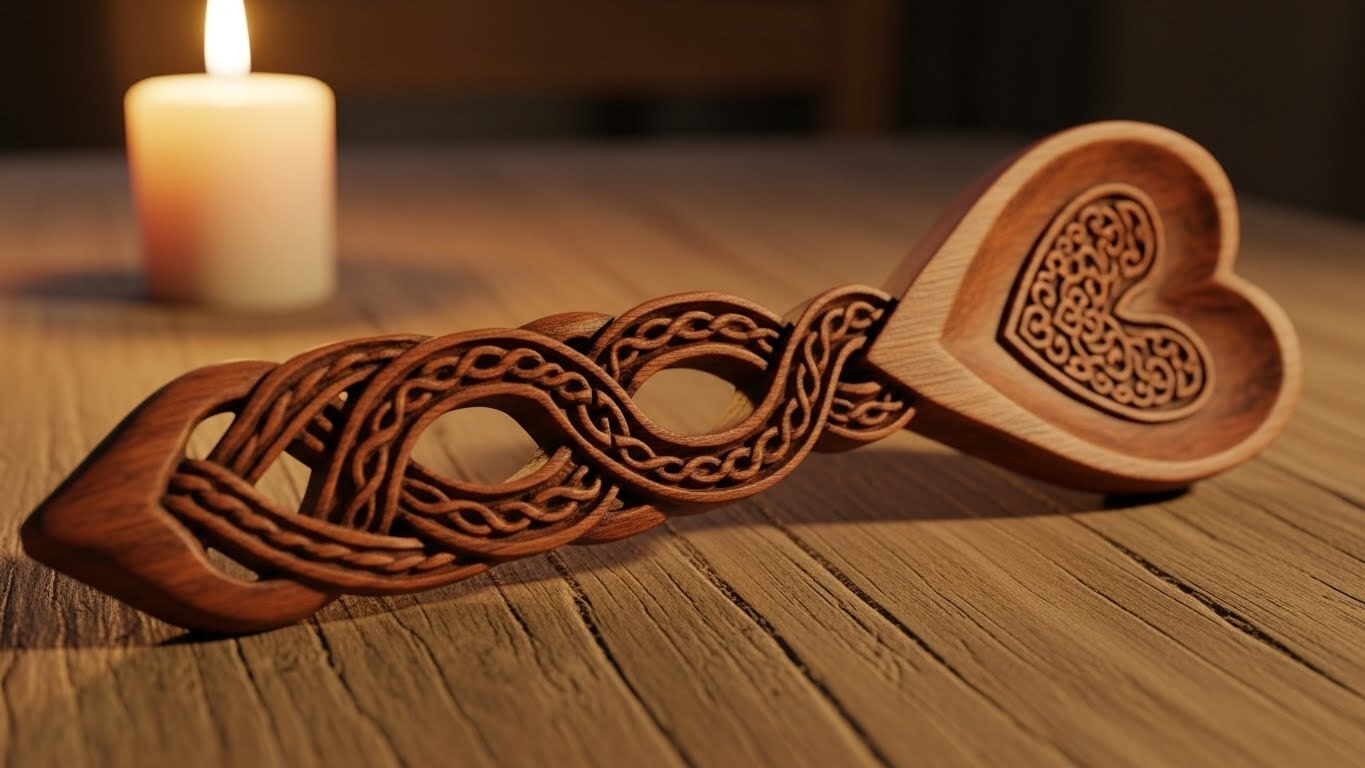
In 17th-century Wales, young men didn’t give flowers or chocolate to the girl they liked. They gave a Lovespoon.
- The Tradition: A young man would spend hours carving a single piece of wood into an intricate spoon. The handle was often decorated with symbols: a chain (loyalty), a heart (love), or a key (home).
- The Meaning: If the girl accepted the spoon, she accepted the courtship. It was a test of the man’s skill and patience.
- The Phrase: As couples sat together while the man carved, they were “spooning.” Over time, the word shifted from the carving to the cuddling.
2. The Science: Wood Kills Bacteria
For years, health inspectors warned against wooden spoons, claiming the porous grain would hide bacteria. They were wrong.
In the 1990s, microbiologists at UC Davis conducted a famous study comparing plastic and wooden cutting boards/spoons. They assumed plastic would be cleaner.
- The Shocking Result: When bacteria (like Salmonella) were placed on plastic, they survived and multiplied in the knife scars. When placed on wood, the bacteria died within minutes.
- Why? Trees have natural antibiotic properties (tannins) designed to protect them from rot in the forest. Even after the tree is cut, the wood continues to fight off germs chemically.

3. The “Wooden Spoon” of Shame
While a Lovespoon was a prize, the “Wooden Spoon” was a punishment.
In the 1800s, at the University of Cambridge, the student who achieved the lowest passing grade in the Mathematics exam was mockingly awarded a giant wooden spoon. It was a badge of dishonor—you passed, but you were the worst of the best.
This tradition lives on in sports like Rugby, where the team that finishes last in the “Six Nations” tournament is said to have “won the wooden spoon.”
4. Why Chefs Refuse to Use Metal
Go into a Michelin-star kitchen, and you will see chefs stirring delicate sauces with wood, not stainless steel. This isn’t just nostalgia; it’s chemistry.
- Thermal Shock: Metal conducts heat instantly. If you put a cold metal spoon into a hot sauce, it can lower the temperature of the mix locally, potentially “breaking” a delicate emulsion. Wood is an insulator; it doesn’t steal the heat.
- Chemical Reaction: acidic foods (like tomato sauce or lemon curd) can react with certain metals, giving the food a metallic taste. Wood is non-reactive. It is the only material that is chemically invisible to your tongue.
5. The Mystery of the “Perfect” Grain
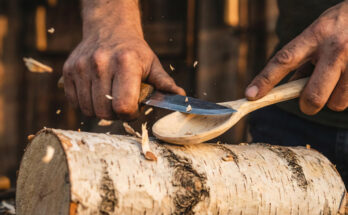
Spoon carvers are obsessed with “crooks.” A crook is the part of the tree where a branch meets the trunk. The wood grain in this section naturally curves.
Why does this matter? If you carve a curved spoon out of a straight log, you are cutting across the grain, creating a weak point where the spoon will snap. But if you find a natural “crook,” the grain flows around the curve. A spoon carved from a crook is nearly unbreakable. Ancient shipbuilders used this same logic to build the hulls of Viking longships.

6. The Oldest Spoon in the World
Before we had forks (which are a relatively new invention), we had spoons. The word “spoon” comes from the Old English spon, meaning “a chip of wood.”
While metal and bone spoons have survived from Ancient Egypt, historians believe the very first tools used by early humans were likely shells attached to wooden sticks—the ancestors of the spoon we use today.
7. The “Living” Finish
This is the strangest fact of all: A wooden spoon never truly dies. If you scratch a plastic spoon, that scratch is there forever, harboring dirt. If you scratch a wooden spoon, the fibers will swell the next time you wash it, often “healing” small dents. Over years of use, the oils from your cooking and the friction of your hand polish the wood, making it smoother and harder than the day you bought it.
It is the only tool in your kitchen that gets better the more you use it.
Conclusion
So, the next time you stir your coffee or mix a batter, take a second to look at that wooden spoon. It is a biological antibiotic, a symbol of romance, and a masterpiece of natural engineering that science still can’t replicate.
Enjoyed these weird facts? Read about The Wood That Gets a Suntan or explore our History section.