When you think of Christmas today, you likely picture decorated pine trees, exchanging gifts, and a jolly man in a red suit. It is a time of peace and family.
But if you could travel back in time to the origins of this holiday, you wouldn’t recognize it at all.
The true history of Christmas is a fascinating mix of ancient Roman parties, Norse mythology, and a Turkish monk who became a legend. In fact, for a significant part of history, celebrating Christmas was actually illegal.
Here is the interesting story behind the world’s most popular holiday.
1. December 25th Was Not Jesus’s Birthday
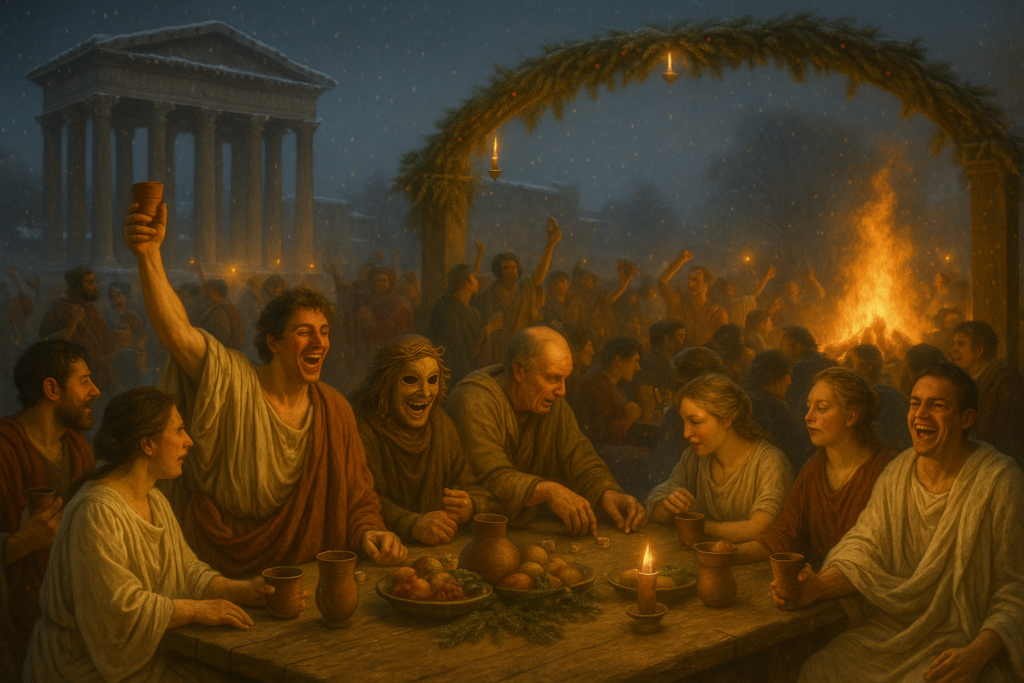
For centuries, historians and theologians have agreed on one thing: Jesus was likely not born on December 25th. The Bible offers no specific date, but clues regarding shepherds watching their flocks suggest a spring birth.
So, why December?
The church chose this date to coincide with Saturnalia, a rowdy ancient Roman festival honoring Saturn, the god of agriculture. Saturnalia was incredibly popular—it involved gambling, feasting, and overturning social norms (masters would serve slaves).
By aligning the birth of Christ with existing midwinter festivals like Saturnalia and the Germanic Yule, the church made it easier for pagan populations to convert to Christianity without giving up their favorite party season.
2. The Real Santa Claus Was a Badass Monk
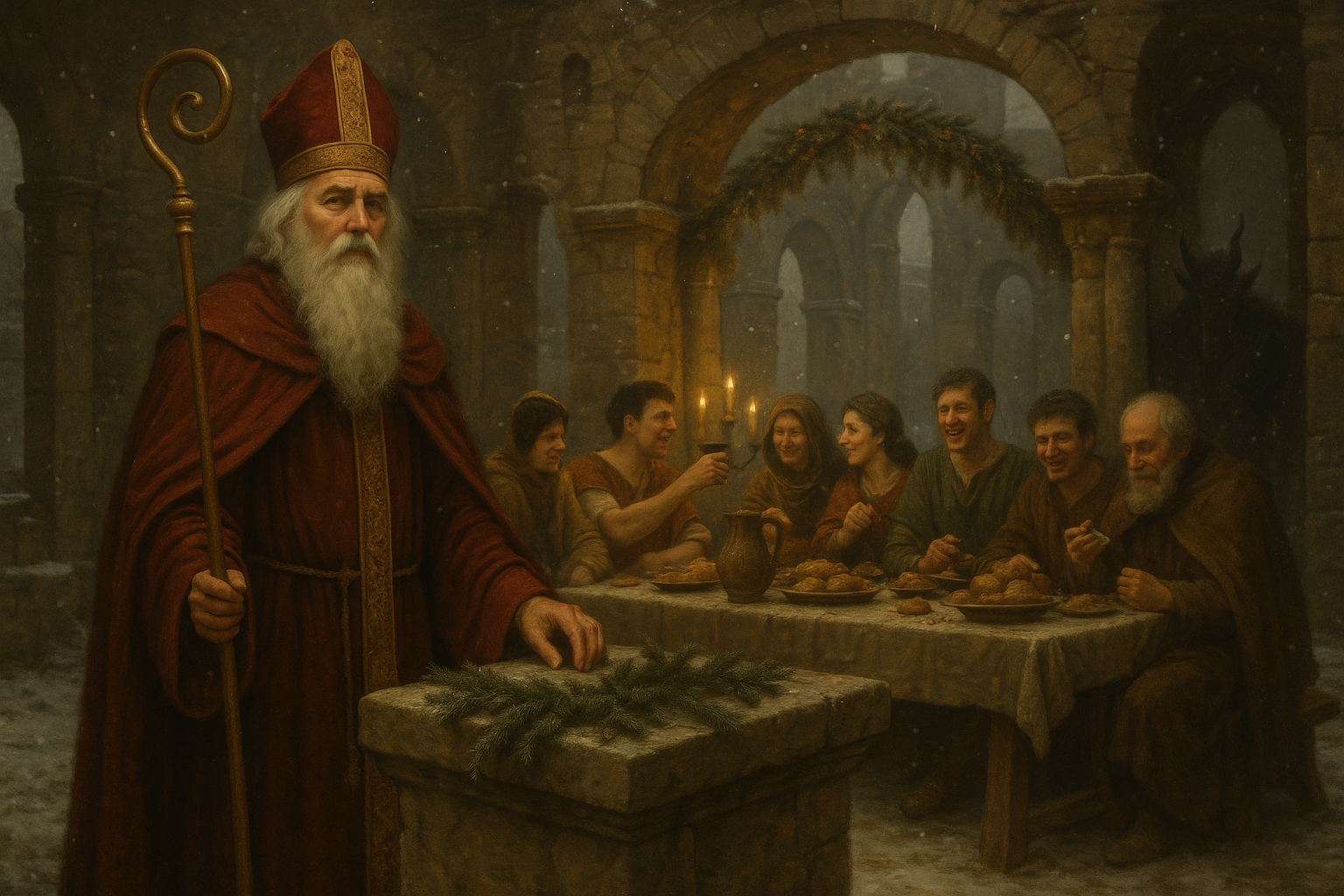
Before he was the North Pole resident we know today, Santa Claus was St. Nicholas of Myra.
Born in the 3rd century in what is now modern-day Turkey, Nicholas was not an elf—he was a fiery, Greek Christian bishop. He was famous for his immense generosity, but also his temper. One famous legend claims that during the Council of Nicaea, he got so angry at a heretic that he walked across the room and slapped him!
The tradition of “stockings” comes from a story where Nicholas anonymously threw bags of gold through a window (or down a chimney) to save three impoverished sisters from being sold into slavery.
3. Christmas Was Once Banned by Law
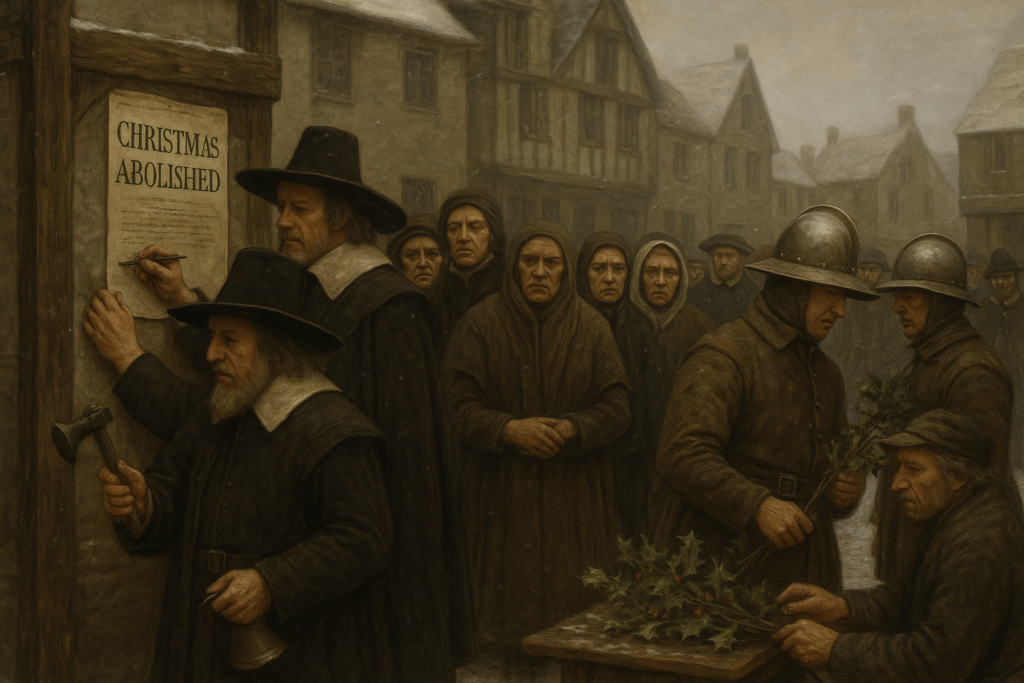
It sounds like the plot of a movie, but the “War on Christmas” was once very real.
In the mid-1600s, Oliver Cromwell and the Puritans took over England. They believed that Christmas was too “decadent” and too closely tied to its pagan roots. As a result, they officially canceled it.
From 1644 to 1660, Christmas was illegal in England. Shops were forced to stay open, and plum puddings were confiscated. The ban even crossed the ocean to America; in Massachusetts, you could be fined five shillings for showing “Christmas joy.”
4. The Christmas Tree is a Modern Invention
Bringing greenery indoors is an ancient tradition. Egyptians decorated with palm rushes, and Druids used mistletoe to celebrate eternal life during the winter solstice.
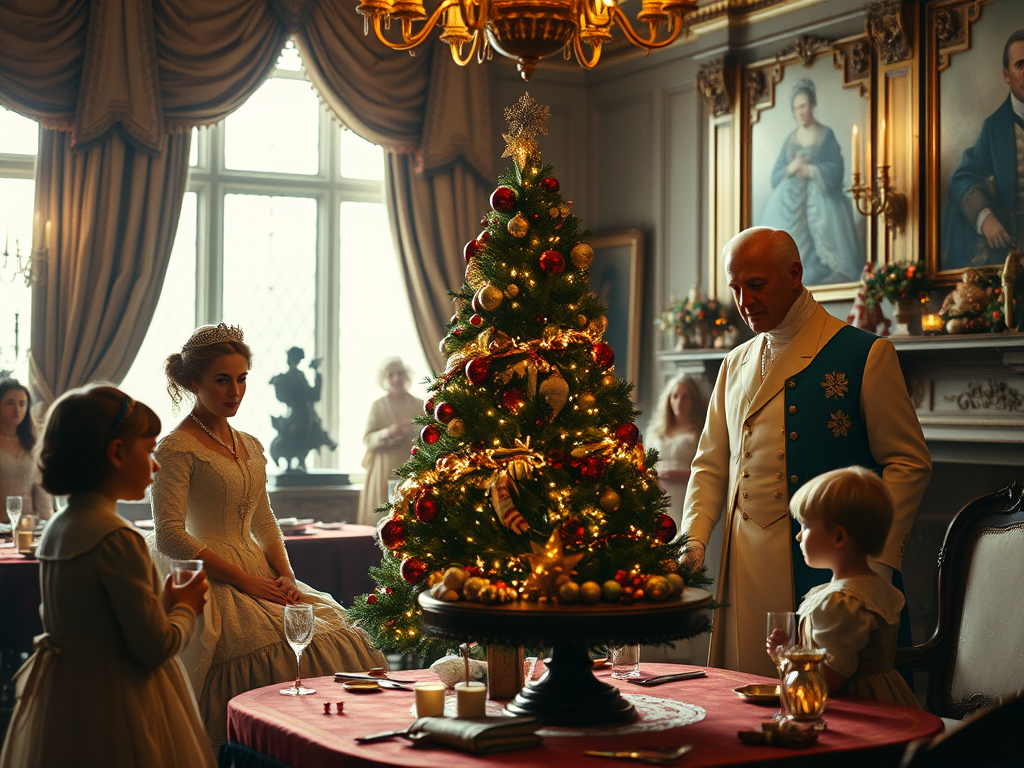
However, the “Christmas Tree” as we know it started in 16th-century Germany. Legend has it that the Protestant reformer Martin Luther was walking home one winter evening, awed by the stars twinkling amidst evergreens. To recreate the scene for his family, he erected a tree in the main room and wired lighted candles to its branches.
The tradition didn’t go global until 1846, when Queen Victoria and her German husband, Prince Albert, were sketched in the Illustrated London News standing with their children around a Christmas tree. Since Victoria was the trendsetter of her time, the Christmas tree immediately became fashionable worldwide.
5. The “Anti-Santa” You Don’t Want to Meet
In the United States and UK, naughty kids get coal. In Alpine folklore, they get Krampus.
Krampus is the dark shadow of St. Nicholas. He is a half-goat, half-demon beast who roams the streets on Krampusnacht (December 5th). While St. Nick hands out candy to good kids, Krampus carries birch branches to swat the bad ones—or a sack to carry them away.
While it sounds terrifying, Krampus parades are still a massive cultural event in Austria, Germany, and parts of Northern Italy today.
Conclusion
Christmas is more than just a day on the calendar; it is a living history book. It is a holiday that survived Roman emperors, Puritan bans, and cultural shifts to become the global phenomenon it is today.
So, when you hang your stocking or light your tree this year, remember: you aren’t just celebrating a holiday—you are participating in rituals that have been evolving for thousands of years
Did you enjoy this story? Explore more in our History and Culture categories to uncover the truth behind your favorite traditions.




One Comment on “The Untold History of Christmas: From Saturnalia to Santa Claus”