We all know the story of Rudolph and his red nose. But science tells us that the real magic of reindeer isn’t in their noses—it is in their eyes.
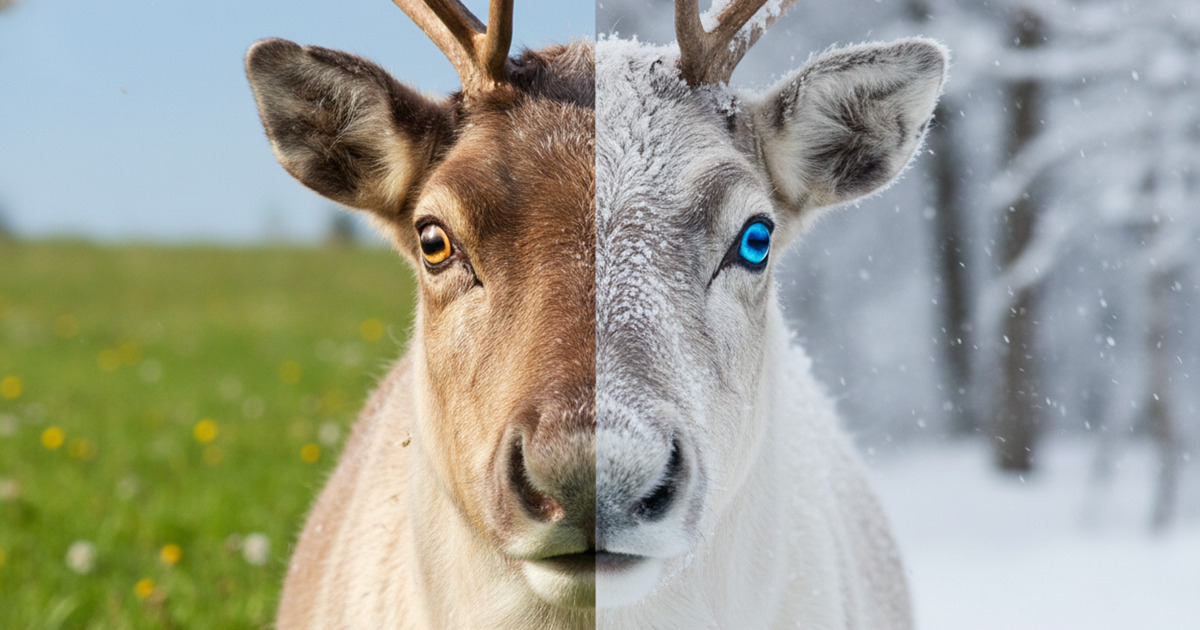
Researchers have discovered that the Reindeer (Rangifer tarandus) is the only mammal on Earth that can change the color of its eyes depending on the season.
In the summer, they have golden eyes. In the winter, they turn deep blue.
It sounds like a myth, but it is a biological superpower that allows them to survive in the eternal darkness of the Arctic winter. Here is the fascinating science behind the animals that pull Santa’s sleigh.
1. Gold in Summer, Blue in Winter
If you look at a reindeer in July, its eyes are a bright, golden-yellow. This color is perfect for handling the constant sunlight of the Arctic summer (the “Midnight Sun”).
But once winter hits and the Arctic plunges into 24-hour darkness, their eyes undergo a physical transformation. The pressure inside the eyeball changes, compressing the tapetum lucidum (the reflective layer behind the retina).
This compression changes the way light reflects off their eyes, shifting the color from gold to a deep, mesmerizing blue.
2. Why Do They Do It? (Night Vision Mode)
This color change isn’t for fashion; it is for survival.
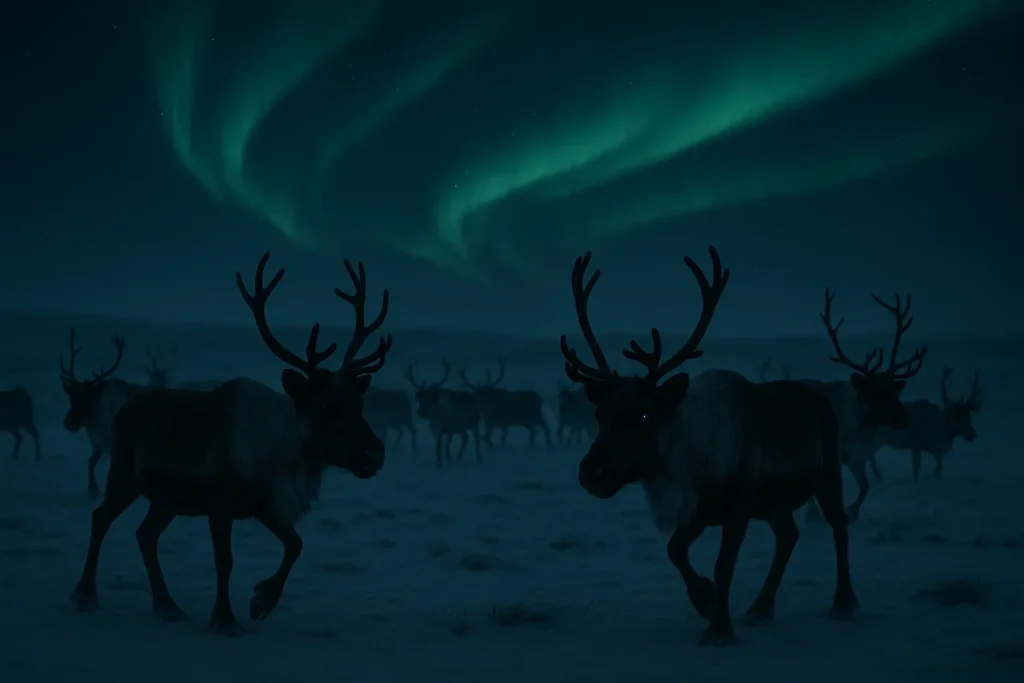
By turning their eyes blue, reindeer scatter more light inside the eyeball. This captures roughly 1,000 times more light than their summer eyes.
It essentially gives them natural night vision goggles. While the blue vision makes their sight a little blurry (like looking through frosted glass), it allows them to spot movement and predators in almost total darkness—a trade-off that keeps them alive when wolves are hunting in the polar night.
3. They Can See “Glowing” Urine
Reindeer have another visual trick up their sleeve: Ultraviolet (UV) Vision.
Humans cannot see UV light (it’s invisible to us), and snow reflects almost all UV light, which would blind us (snow blindness). However, reindeer absorb it.
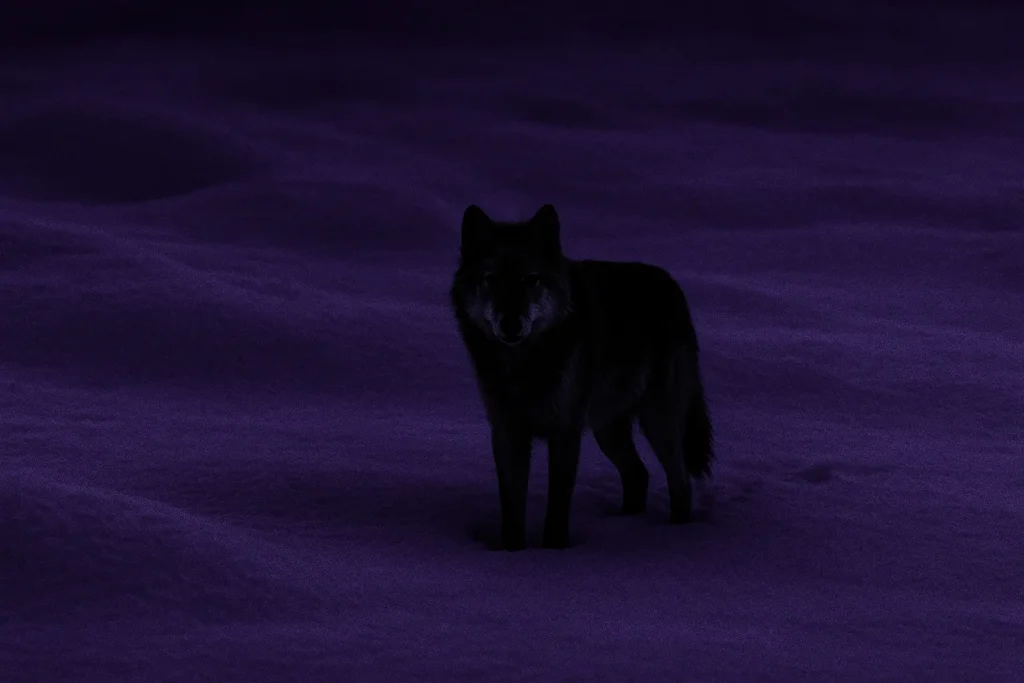
To a reindeer, white snow looks dark, but things that absorb UV light—like fur and urine—glow brightly against the snow.
- Predators: A white wolf camouflaged in white snow is invisible to humans. To a reindeer, the wolf’s fur appears black or glowing against the snow.
- Food: Lichen (their main food source) also stands out in UV, making it easier to find under the ice.
So, while we see a white wasteland, reindeer see a high-contrast map of food and danger.
4. The Mystery of the “Clicking” Knees
If you ever hear a reindeer herd walking, you will hear a loud click-click-click sound.
This isn’t a joint problem. Reindeer have a specialized tendon in their knees that snaps over a bone with every step. Scientists believe this evolved so that the herd can stay together in a blizzard. Even if they can’t see the reindeer in front of them, they can hear where the herd is moving.
Conclusion
Rudolph may have gone down in history for his nose, but the rest of the herd deserves credit for their eyes.
From shifting colors to seeing the invisible world of UV light, reindeer are some of the most highly adapted animals on the planet. They are literally built for the dark.
Enjoyed this holiday biology lesson? Read about the Real Wolverine or explore the Untold History of Christmas.