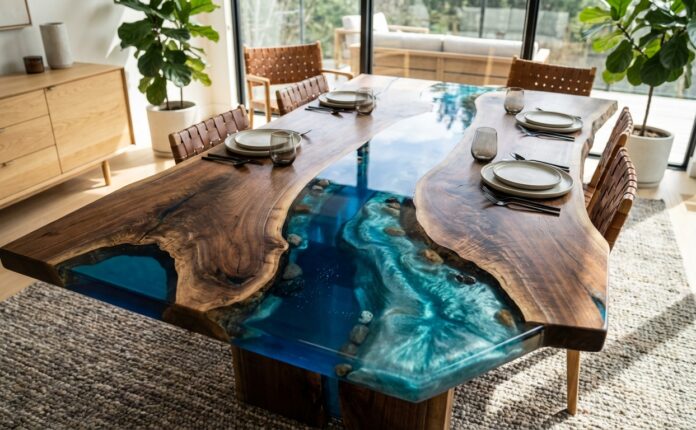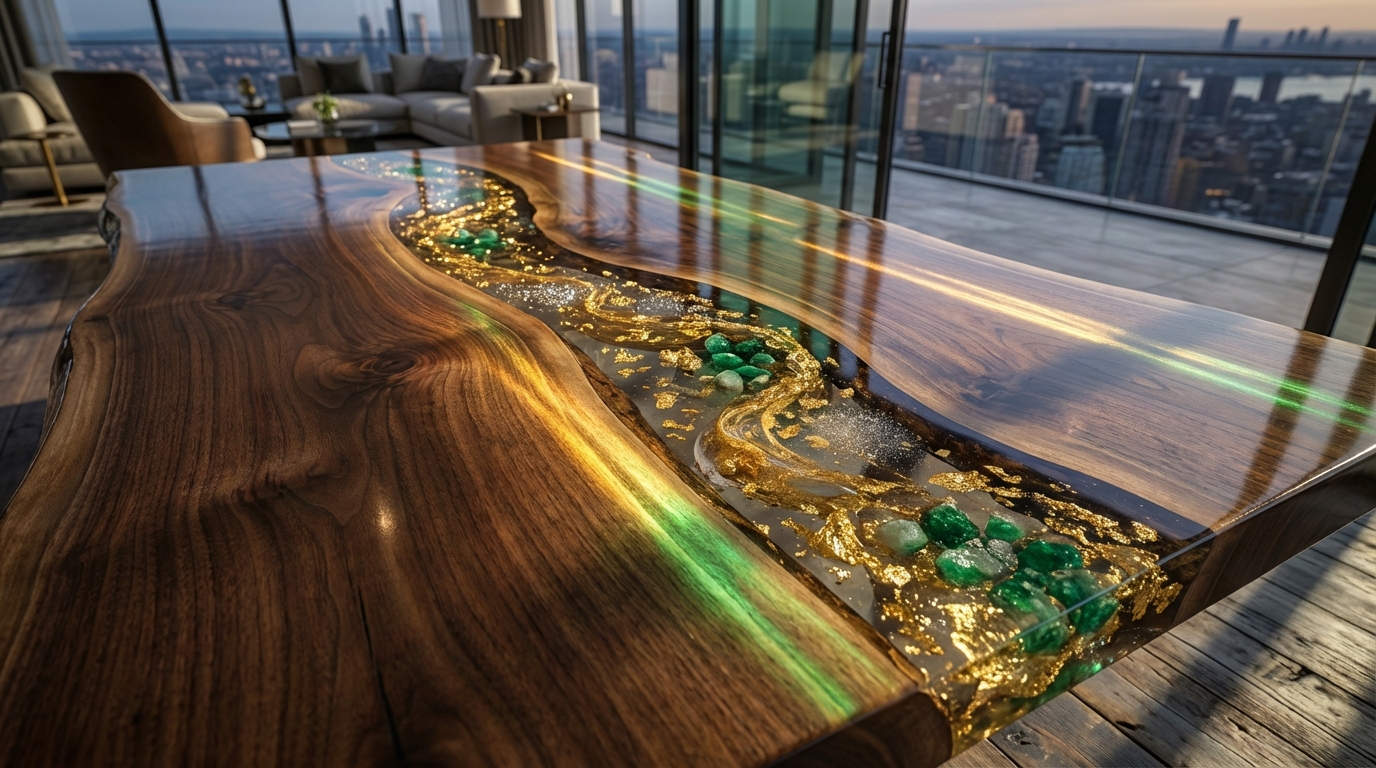
Epoxy resin started as an industrial adhesive, but in the hands of visionary artists, it has become one of the most sought-after mediums in luxury interior design. Today, a custom epoxy resin piece isn’t just furniture; it is a status symbol.
But why do some resin designs cost more than a luxury sports car? The astronomical price tags come down to three factors: the sheer cost of deep-pour liquid chemistry, the agonizing hundreds of hours of manual labor required to polish it, and the catastrophic risk of a single mistake ruining the entire piece.
From the mansions of Beverly Hills to the superyachts of Dubai, the ultra-wealthy are commissioning mind-bending resin creations. Let’s dive into the top 10 most expensive and exclusive epoxy resin design categories and pieces in the world.
1. The Custom Epoxy Grand Piano (Estimated Value: $100,000+)
The undisputed king of resin luxury is the fully customized, transparent epoxy grand piano. High-end instrument makers like Goldfinch and various bespoke designers have begun replacing traditional black lacquer wooden piano lids and legs with massive, acoustically tested blocks of clear or tinted resin.
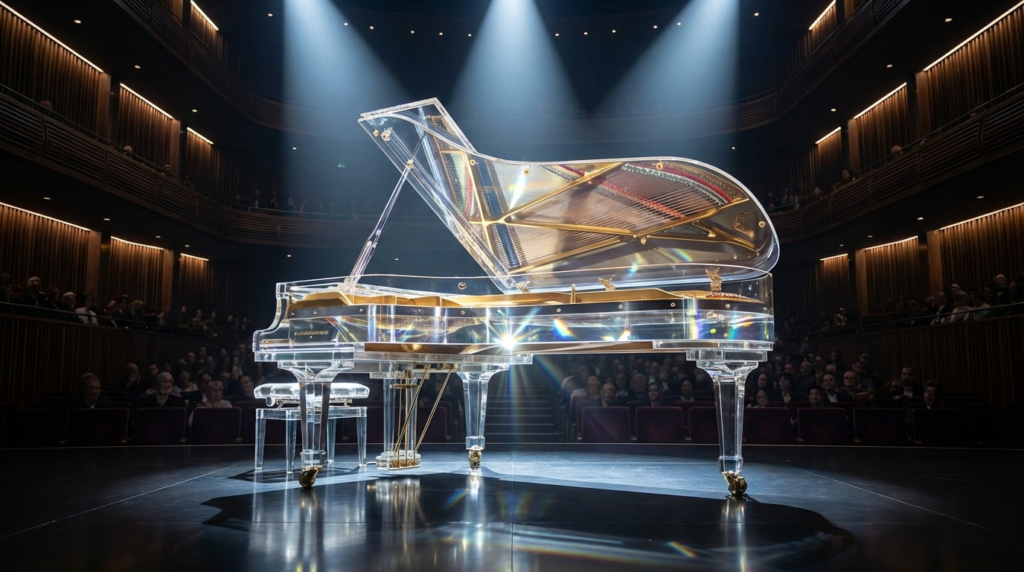
- Why it costs so much: A grand piano is already a marvel of tension and acoustic engineering. Pouring hundreds of pounds of resin without warping the delicate soundboard or ruining the acoustic resonance requires millions of dollars in research and development.
2. “Megastructure” Corporate Boardroom Tables (Estimated Value: $50,000 – $120,000)
When a Fortune 500 company wants to make a statement in their executive boardroom, a standard oak table no longer cuts it. Custom resin studios are frequently commissioned to build tables spanning 20 to 30 feet long in a single, seamless pour.
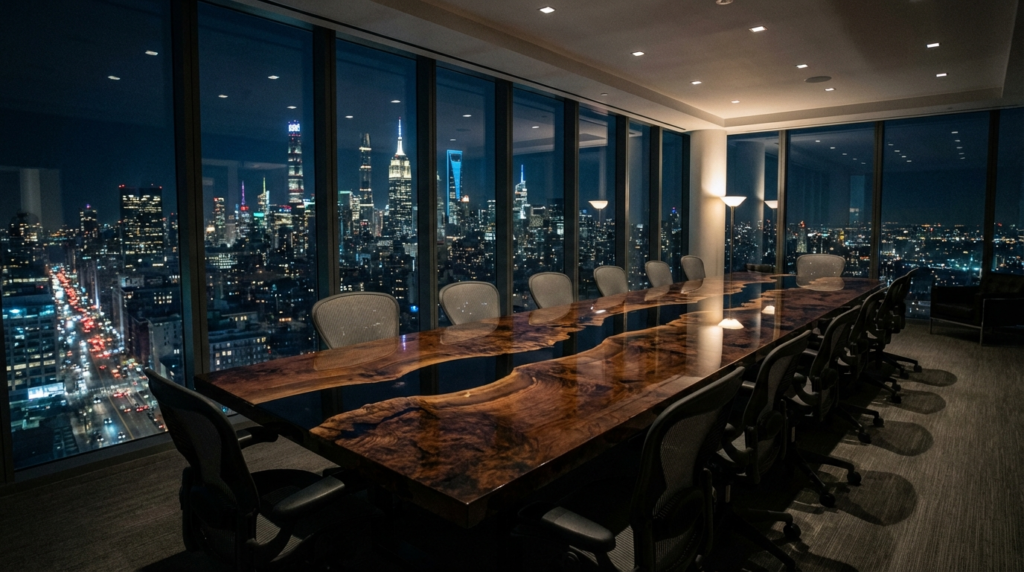
- Why it costs so much: The logistics alone are a nightmare. A 30-foot table requires a custom-built, climate-controlled room just for the curing process. It can consume upwards of 100 gallons of premium deep-pour epoxy. Transporting a 2,000-pound solid block of wood and plastic into a downtown skyscraper often requires removing windows and using construction cranes.
3. Alexandre Chapelin’s “LA Table” Series (Estimated Value: $15,000 – $50,000+)
French designer Alexandre Chapelin is essentially the godfather of the hyper-realistic resin ocean table. His studio, LA Table, produces the famous “Lagoon” series. These aren’t just tables; they are topographical maps of the ocean floor carved from travertine marble and filled with proprietary blue resins.
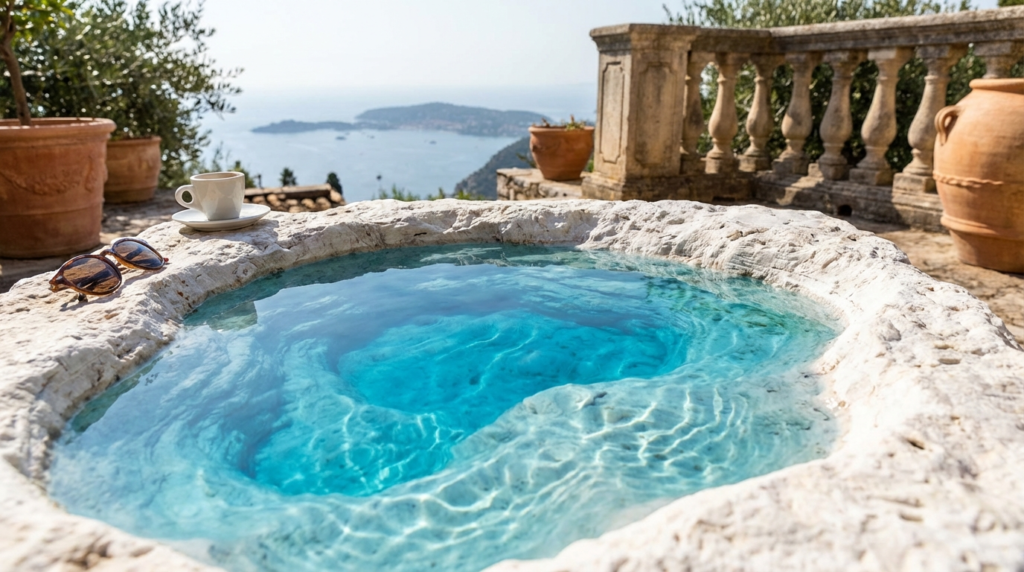
- Why it costs so much: You are paying for legendary artistic provenance. Chapelin doesn’t use standard wood; he carves massive blocks of stone to mimic oceanic drop-offs, making his tables incredibly heavy, rare, and globally recognized in the art world.
4. High-End Horology Encapsulations (Estimated Value: $40,000 – $100,000+)
One of the wildest trends in luxury resin art involves the controversial practice of encapsulating authentic luxury items. Some pop-art creators and avant-garde designers have taken authentic Rolex, Patek Philippe, or Audemars Piguet watches and permanently suspended them in solid blocks of clear resin to serve as desk sculptures.
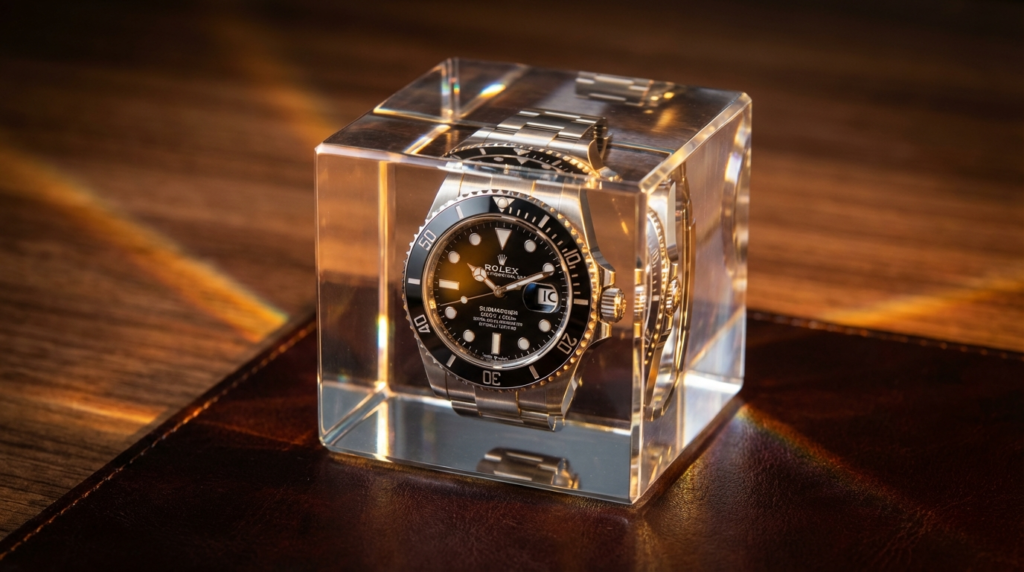
- Why it costs so much: The resin itself is just a fraction of the cost. The price tag is driven entirely by the permanent sacrifice of a $50,000 luxury timepiece that can never be worn or serviced again.
5. Petrified Wood & Resin Fusions (Estimated Value: $20,000 – $40,000)
Why use a tree cut down last year when you can use a tree that died 20 million years ago? Petrified wood—where the organic cellular structure of a prehistoric tree has been completely replaced by minerals and quartz over millennia—is incredibly rare and expensive.
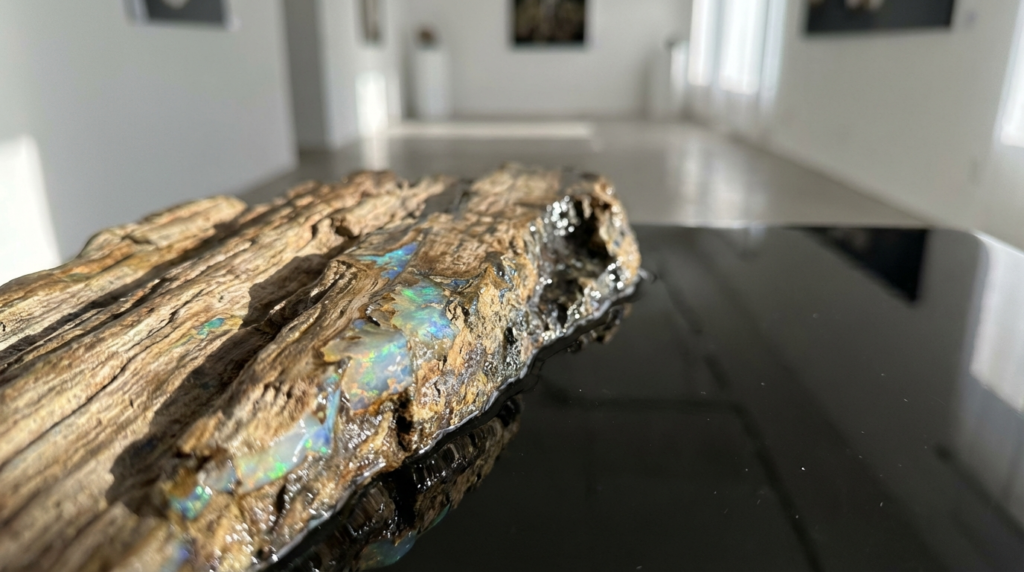
- Why it costs so much: Sourcing massive, intact slabs of petrified wood is an archaeological feat. When high-end designers fill the natural cracks of these million-year-old stone trees with liquid gold or deep black resin, the resulting table bridges the gap between paleontology and modern design.
6. Greg Klassen’s Original River Collection (Estimated Value: $10,000 – $25,000+)
While thousands of people make river tables today, Greg Klassen is widely credited with pioneering the topographical glass-and-wood river table movement in the Pacific Northwest. His original pieces—which initially used custom hand-cut glass instead of resin, and later evolved into high-end epoxy hybrids—are considered collector’s items.
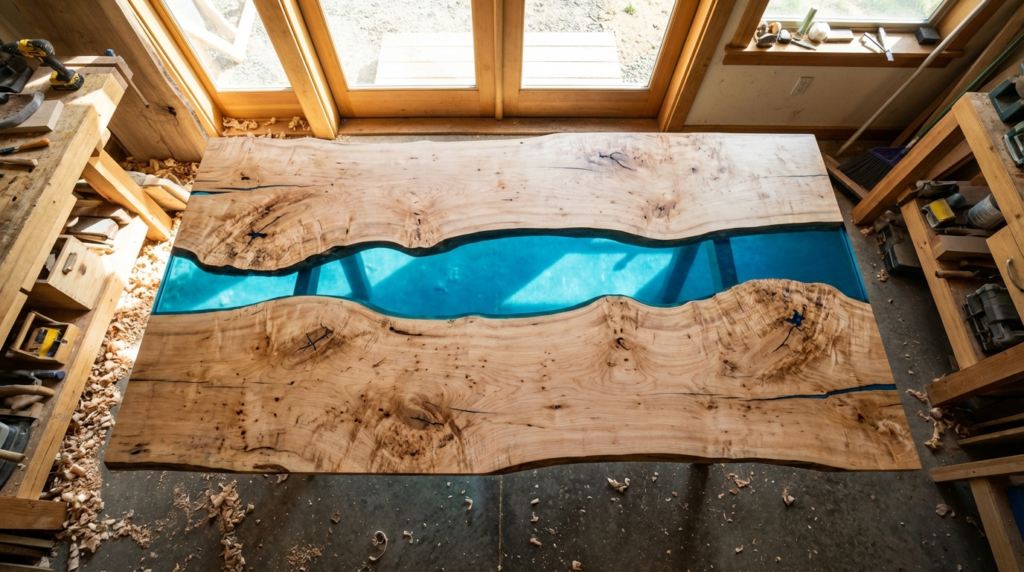
- Why it costs so much: Buying a Klassen piece is like buying an original Picasso rather than a print. You are paying for the signature of the man who arguably invented the aesthetic.
7. 24-Karat Gold Leaf Geode Walls (Estimated Value: $10,000 – $30,000)
Luxury hotels and private estates are replacing traditional paintings with massive, multi-panel resin geode installations. These wall pieces mimic the inside of an agate stone but on a monstrous scale.
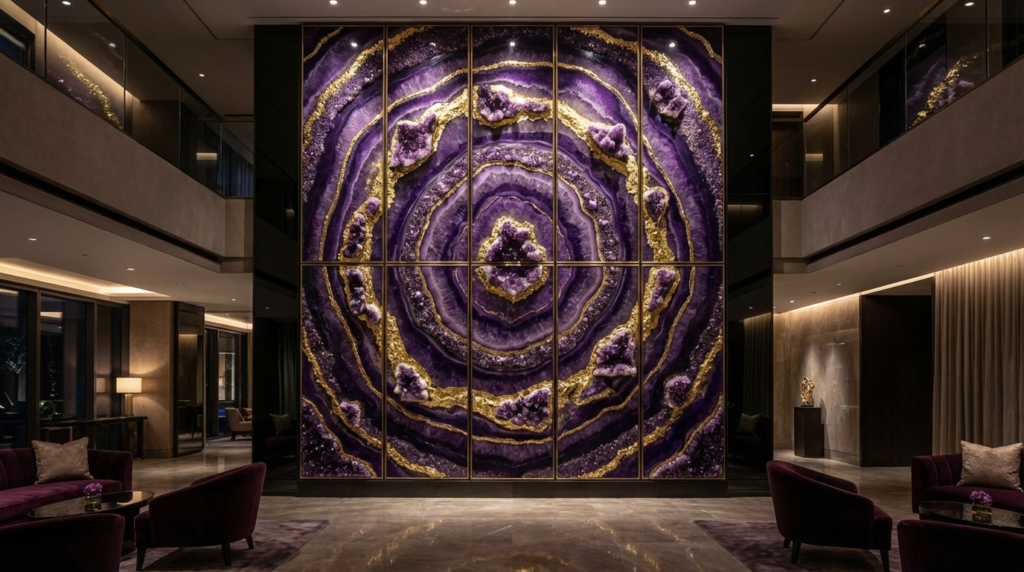
- Why it costs so much: To catch the light in cavernous hotel lobbies, artists embed hundreds of raw, ethically sourced amethyst and clear quartz points into the resin. The “veins” of these artificial stones are then meticulously hand-painted using authentic 24-karat gold leaf and pure crushed diamond dust.
8. Bioluminescent “Avatar” Megaliths (Estimated Value: $15,000 – $25,000)
Moving beyond standard glow-in-the-dark powders, some elite studios are creating bioluminescent tables that look like they were pulled directly from the movie Avatar.
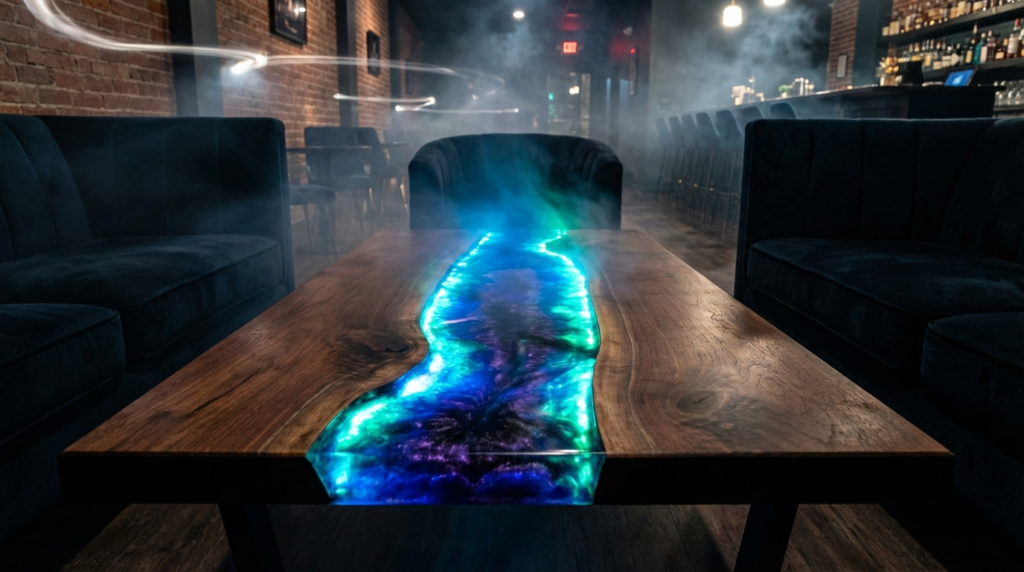
- Why it costs so much: These pieces use highly advanced, aerospace-grade rare-earth strontium aluminate pigments. Some designers even integrate hidden, waterproof LED matrices directly into the wood before the resin is poured. These tables can be programmed via smartphone to pulse, change color, and react to the music playing in the room.
9. The “Ocean Drop” Sculptures (Estimated Value: $8,000 – $20,000)
Unlike flat tables, “Ocean Drop” sculptures are massive, vertical, freestanding monolithic blocks of resin. Artists sculpt a piece of burled wood to look like an underwater cliff face, then cast it in a perfect cube of clear blue resin featuring miniature, hand-painted scuba divers or whales suspended inside.
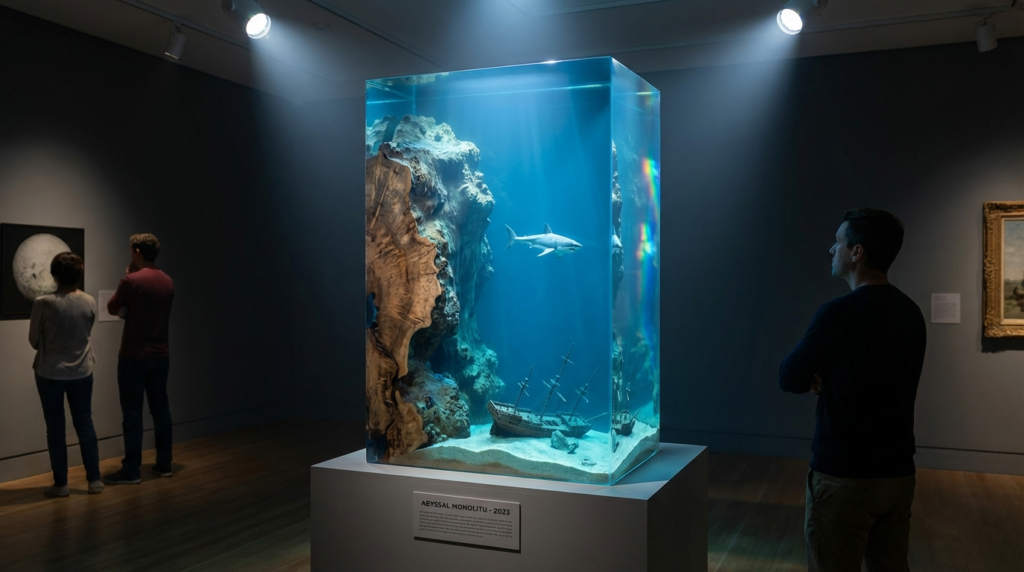
- Why it costs so much: Creating a perfect, bubble-free, three-dimensional cube of resin that is two feet thick requires a masterful understanding of chemical thermal dynamics and specialized industrial vacuum chambers.
10. The “Secret Wood” Bespoke Chandeliers (Estimated Value: $10,000 – $20,000)
Resin isn’t just for looking down at; it is now being hung from the ceiling. Designers are creating massive chandeliers from shattered, highly burled wood fragments encased in translucent, frosted resin.
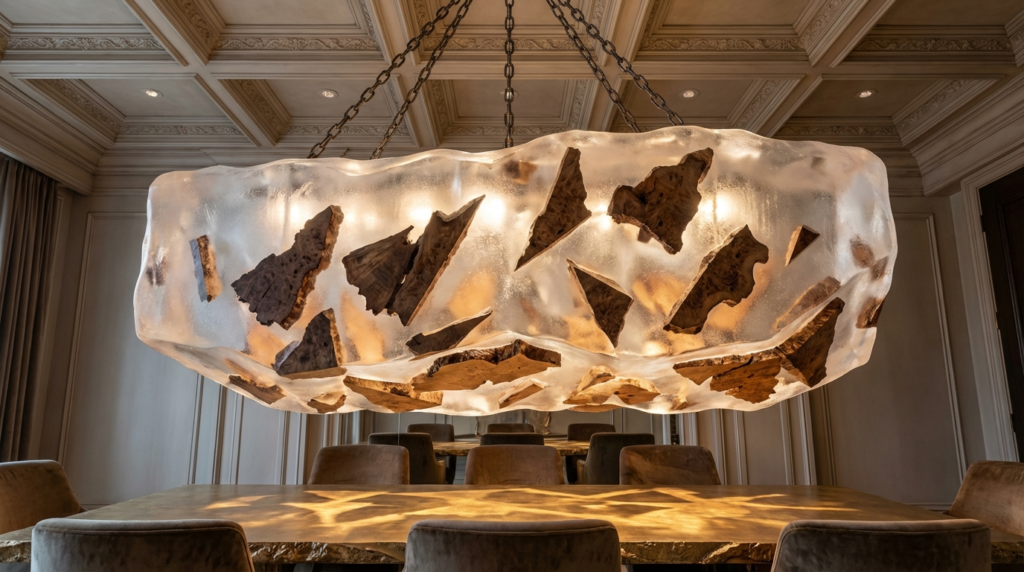
- Why it costs so much: These pieces act as giant light diffusers. The engineering required to safely suspend a 200-pound block of wood and resin from a ceiling, while safely routing high-voltage electrical wiring through the liquid plastic before it cures, is an incredibly specialized and highly insured skill.
Conclusion: The Ultimate Flex of Patience and Chemistry
The most expensive epoxy resin designs in the world prove that this medium has transcended its DIY roots. It is no longer just a hobbyist’s craft; it is a legitimate form of fine art and high-end engineering. When you buy a $50,000 resin table, you aren’t just buying wood and plastic. You are purchasing the artist’s anxiety, their chemical mastery, and a spectacular moment of liquid chaos frozen forever in time.