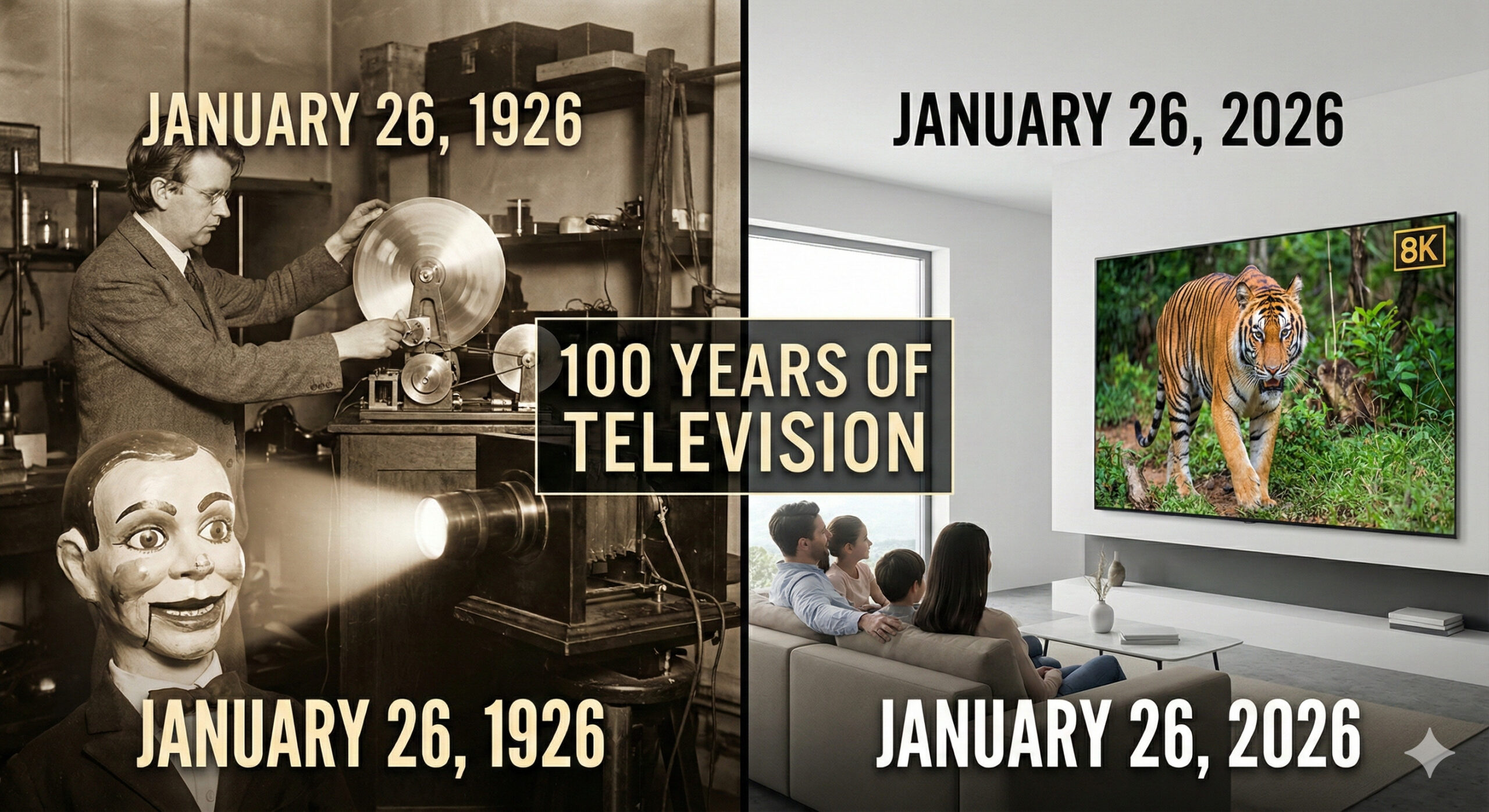
If you look around you right now, chances are you will see a screen. Whether it’s the phone in your hand, the laptop on your desk, or the 4K panel on your wall, we live in a world dominated by glowing rectangles.
But exactly 100 years ago, the idea of transmitting a moving image instantly across a wire was considered magic—or madness.
As we approach January 26, 2026, we mark the 100th anniversary of the moment that changed global culture forever: the first public demonstration of a true television system. And believe it or not, the first “face” ever seen on TV wasn’t a news anchor or an actor. It was a terrifyingly painted ventriloquist’s dummy named “Stooky Bill.”
The Madman in the Attic
In late 1925, a Scottish engineer named John Logie Baird was working in a cramped attic laboratory in London. He wasn’t well-funded like the researchers at Bell Labs or General Electric. He was working with scraps—bicycle lights, scanning discs cut from cardboard, and darning needles held together with sealing wax and glue.
Baird was obsessed with the idea of “seeing by wireless.” Many scientists said it was impossible to transmit a moving face with enough clarity to be recognizable. Baird was determined to prove them wrong.
Meet “Stooky Bill”: The First TV Star
Baird’s scanning system was mechanical, using a spinning disk with holes spiraling toward the center (known as a Nipkow disk). To test it, he needed a subject that could sit perfectly still for hours under the blistering heat of his floodlights. No human could endure it.
So, Baird recruited a partner: Stooky Bill.
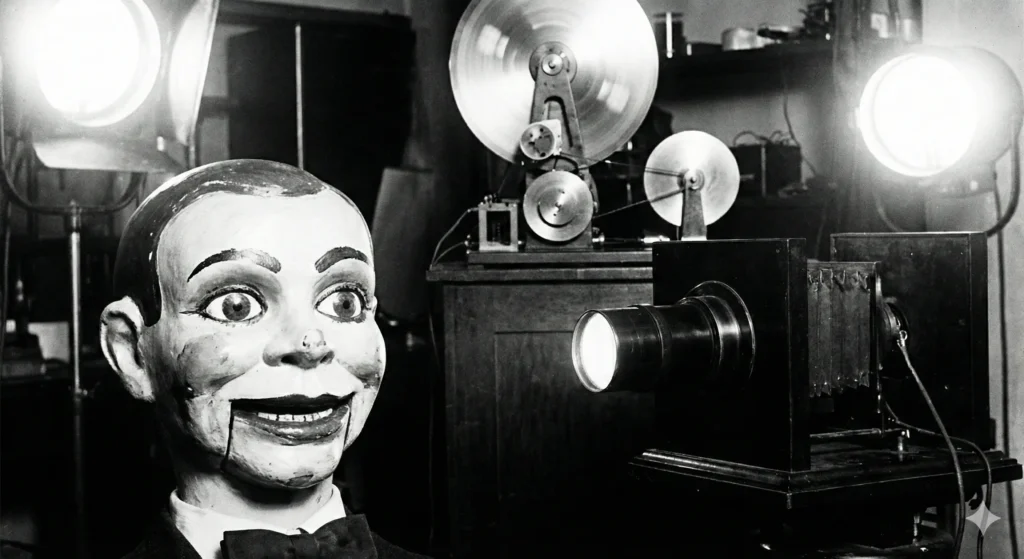
Bill was an old ventriloquist’s dummy head. Baird painted Bill’s face with stark contrasting colors—orange and black—to make his features stand out to the primitive photocells. For weeks, Stooky Bill spun around in front of the whirring disks, beaming his creepy, grinning face from one room to another.
On October 2, 1925, Baird adjusted the contrast and suddenly, the image on his tiny receiver screen snapped into focus. He could see the shadings of the dummy’s nose and eyes. He had achieved a greyscale image.
Excited, Baird ran downstairs and grabbed an office boy named William Taynton, paying him 2 shillings and sixpence to sit in the hot seat. Taynton became the first human to appear on television, but Stooky Bill will always be the first face.
The Historic Demonstration: January 26, 1926
After refining his machine, Baird was ready for the world. On Tuesday, January 26, 1926, he invited members of the Royal Institution and a reporter from The Times to his laboratory at 22 Frith Street, London.
The guests squeezed into the attic. They watched as the spinning disks whirred to life. On a tiny screen, measuring just a few inches wide, they saw the flickering, grainy, but unmistakable moving head of Stooky Bill, and then the human face of Baird’s partner.
The Times reported politely on the invention, but few realized the “televisor” would eventually replace the radio as the centerpiece of the human home.
From Mechanical Disks to the Digital Age
Baird’s mechanical system didn’t last long; it was eventually superseded by electronic cathode-ray tubes (CRTs). However, his spirit of innovation kicked off a century of rapid acceleration.
- 1926: First Demo (30 lines of resolution).
- 1950s: Color TV enters the mainstream.
- 1990s: The switch to Digital and HD.
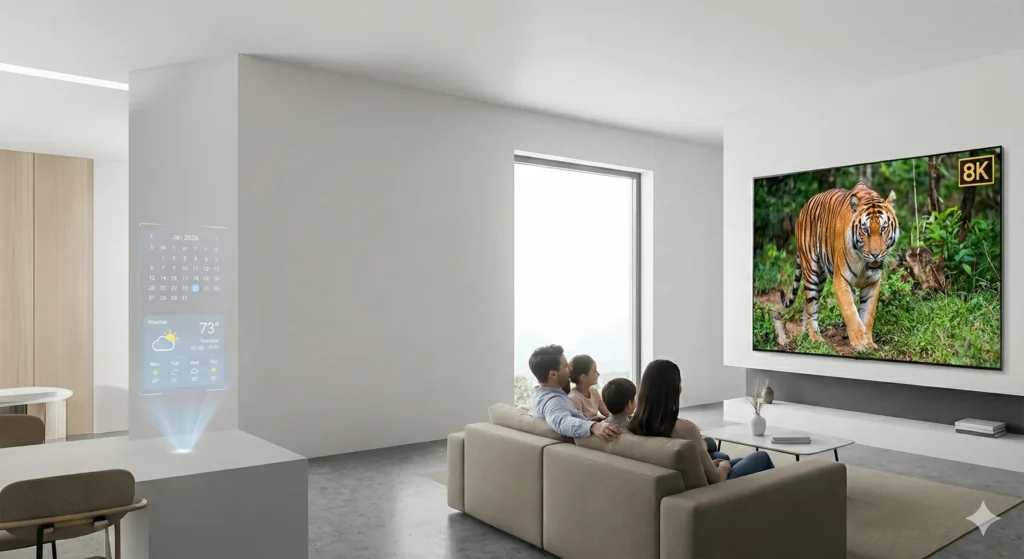
- 2026: We now have AI-generated video and 8K holographic displays.
The Legacy
It is humbling to think that the multi-billion dollar streaming industry of 2026—Netflix, Disney+, YouTube—all traces its DNA back to a cluttered attic in London and a painted puppet head spinning in front of a bicycle lamp.
So, the next time you binge-watch your favorite series, take a moment to wish a Happy 100th Birthday to the technology that made it possible. And maybe pour one out for Stooky Bill, the dummy who started it all.