There is a profound, almost primal satisfaction in watching a liquid transform into a rock-hard solid. For centuries, humanity achieved this through extreme heat—melting glass in roaring furnaces or smelting iron in crucibles. Today, one of the most mesmerizing transformations in the world of furniture design happens at room temperature, right inside the woodshop. It is the modern alchemy of the epoxy resin table.
Epoxy resin has completely revolutionized custom furniture. What began decades ago as a high-strength industrial adhesive used primarily in aerospace, plumbing, and boat manufacturing has evolved into a medium capable of freezing time, mimicking the deep ocean, and fusing organically with ancient slabs of wood.
The resin table is no longer just a fleeting internet trend; it has cemented itself as a hallmark of luxury, bespoke interior design. But what exactly makes these tables so captivating? It is the intersection of raw, organic chaos and pristine, synthetic perfection. It is the contrast between the warm, matte texture of natural wood grain and the cold, glossy, glass-like finish of cured epoxy.
Whether you are looking to commission a custom dining table that will serve as the centerpiece of your home, searching for a new woodworking obsession, or simply fascinated by how things are made, you are in the right place. In this comprehensive guide, we are going to explore the underlying chemistry of epoxy resin, detail the most breathtaking table design ideas captivating the internet, and uncover the meticulous, often harrowing processes required to bring these massive pieces of functional art to life.
The Science of the Pour: Understanding Table-Grade Epoxy
Before we can dive into the breathtaking design ideas, we have to understand the medium itself. The science of epoxy is the foundation upon which every successful table is built. You cannot simply pour gallons of liquid plastic into a wooden frame and hope for the best; you are essentially orchestrating a massive chemical reaction in your living room or garage.
The Two-Part System
Epoxy resin is a two-part polymer system. When you purchase a kit for a table, it comes in two separate containers:
- Part A (The Resin): A viscous, honey-like liquid containing short-chain polymers known as epoxides.
- Part B (The Hardener): A co-reactant containing chemical compounds called amines.
Separately, these liquids are inert and can sit on a shelf for years. But the moment you mix them together in the correct ratio, an incredible chemical reaction begins. The amines in the hardener act as a bridge, linking the short polymer chains in the resin together into a massive, complex, three-dimensional web. This process is called “cross-linking,” and it is what turns the liquid into a durable solid.
The Exothermic Reality and “Thermal Mass”
This cross-linking process requires energy, and more importantly, it releases energy in the form of heat. This is known as an exothermic reaction.
This is where the science gets dangerous and where many novice table-makers ruin their first projects. If you mix a large batch of standard, fast-curing resin and leave it sitting in a bucket, the heat generated by the cross-linking molecules becomes trapped. The mixture will rapidly heat up, sometimes exceeding 400°F (200°C). It will literally begin to boil, smoke, turn yellow, and crack in a violent event woodworkers call a “flash cure.”
The Invention of “Deep Pour” Resin
To create the massive, two-inch-thick dining tables we see today, chemists had to invent deep pour resins (also known as casting resins).
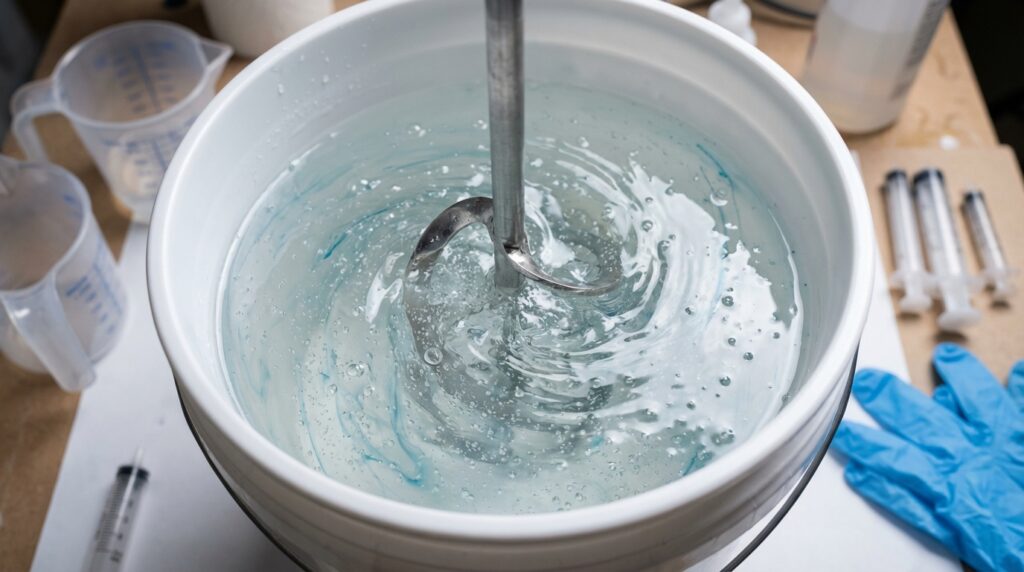
These specialized formulas drastically slow down the chemical reaction. Instead of curing in 24 hours like a tabletop coating resin, a deep pour resin might take a full week to harden. By slowing down the cross-linking process, the resin releases its heat very slowly, allowing artists to pour it two, three, or even four inches thick without it boiling over. Understanding this delicate balance of chemistry, ambient room temperature, and “thermal mass” (the total volume of resin generating heat) is the true secret behind every single table on this list.
The Harrowing Process: How a Resin Table is Actually Built
Building an epoxy table is not for the faint of heart. It is a high-stakes, expensive endeavor that requires meticulous preparation. A single mistake can ruin hundreds of dollars worth of wood and liquid resin. Here is the fascinating, step-by-step anatomy of how these tables are constructed.
1. Sourcing and Prepping the Wood
A true resin table relies on “live-edge” wood slabs. When a lumbermill cuts a tree, they usually slice off the rough, bark-covered edges to create perfectly square planks. Woodworkers who make resin tables specifically seek out slabs that retain the tree’s natural, wandering outer shape.
However, you cannot just use a tree you cut down yesterday. The wood must be dried in a kiln until its moisture content is below 10%. If the wood is too wet, the moisture will react with the curing resin, causing massive, cloudy bubbles, and the wood will eventually warp and crack the table as it dries over the years. Furthermore, the artisan must painstakingly remove every single piece of bark using chisels and wire brushes. If bark is left on, it will eventually rot and detach from the hardwood, causing the resin river to fall out of the table entirely.
2. Building the Fortress (The Mold)
Because uncured resin is a liquid that aggressively searches for any possible escape route, the maker must build a completely watertight mold. This is usually constructed out of melamine (a smooth, plastic-coated wood) covered entirely in specialized release tape or liquid mold release wax.
The edges are then sealed with heavy-duty silicone caulking. A single gap the size of a pinhead in the silicone seal will result in gallons of expensive liquid resin leaking onto the shop floor overnight.
3. The Battle Against Buoyancy
Wood is highly buoyant. If you pour five gallons of liquid resin over a slab of wood inside a mold, the wood will immediately float to the top, ruining the alignment and the project. Every piece of wood must be heavily clamped down to the base of the mold using wooden bridges and steel clamps.
4. The Deep Pour and Bubble Popping
Once the wood is locked down, the deep pour epoxy is meticulously measured, mixed, tinted with pigments, and poured into the voids. Because mixing introduces thousands of microscopic air bubbles into the thick liquid, the artist must use a blowtorch or heat gun. Passing a flame rapidly over the surface of the wet resin changes the surface tension, drawing the bubbles up and popping them instantly, leaving a glass-clear finish.
5. Flattening the Beast (The Router Sled)
After a week of curing, the table is pulled from the mold. At this stage, it looks terrible. The resin is usually slightly uneven, and the wood is rough. The table is too wide to fit through a standard woodworking planer, so the artisan must build a “router sled.” This is a custom jig that allows a high-speed router to glide back and forth over the table on rails, slowly shaving off millimeters of wood and resin at a time until the entire surface is perfectly flat and level.
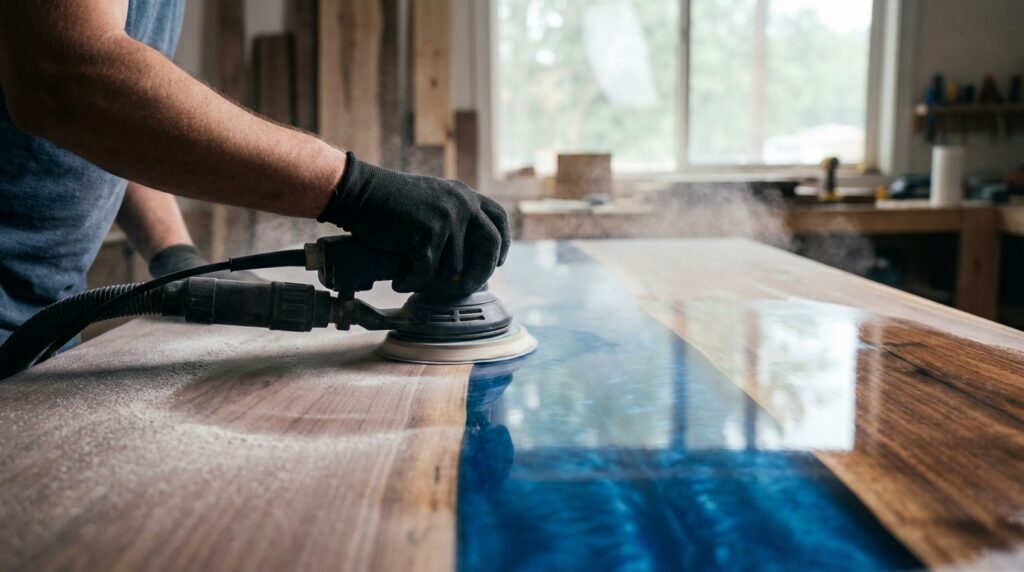
6. The Grueling Sanding Process and Final Finish
The true magic happens during sanding. The artist must sand the entire massive table, moving from rough 60-grit sandpaper all the way up to an impossibly fine 3000-grit polishing pad. This can take days. Finally, a specialized hard-wax oil (like Rubio Monocoat) or an automotive-grade ceramic coating is applied, instantly turning the dull, scratched resin into a crystal-clear, glass-like masterpiece.
Breathtaking Epoxy Table Design Ideas
Now that we understand the immense labor and science behind the craft, let’s explore the most spectacular table designs that are pushing the boundaries of functional art.
1. The Classic “River” Dining Table
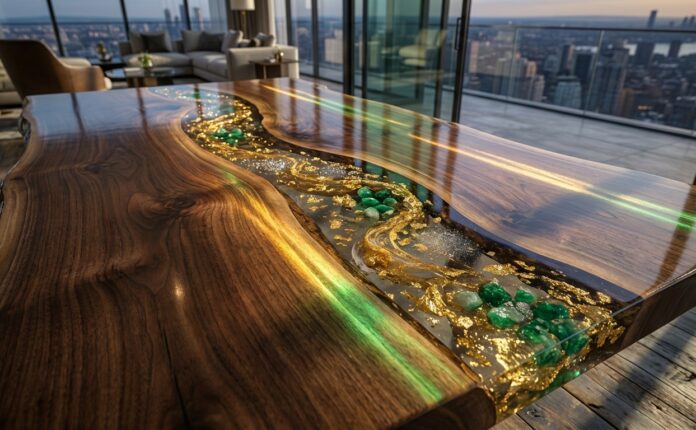
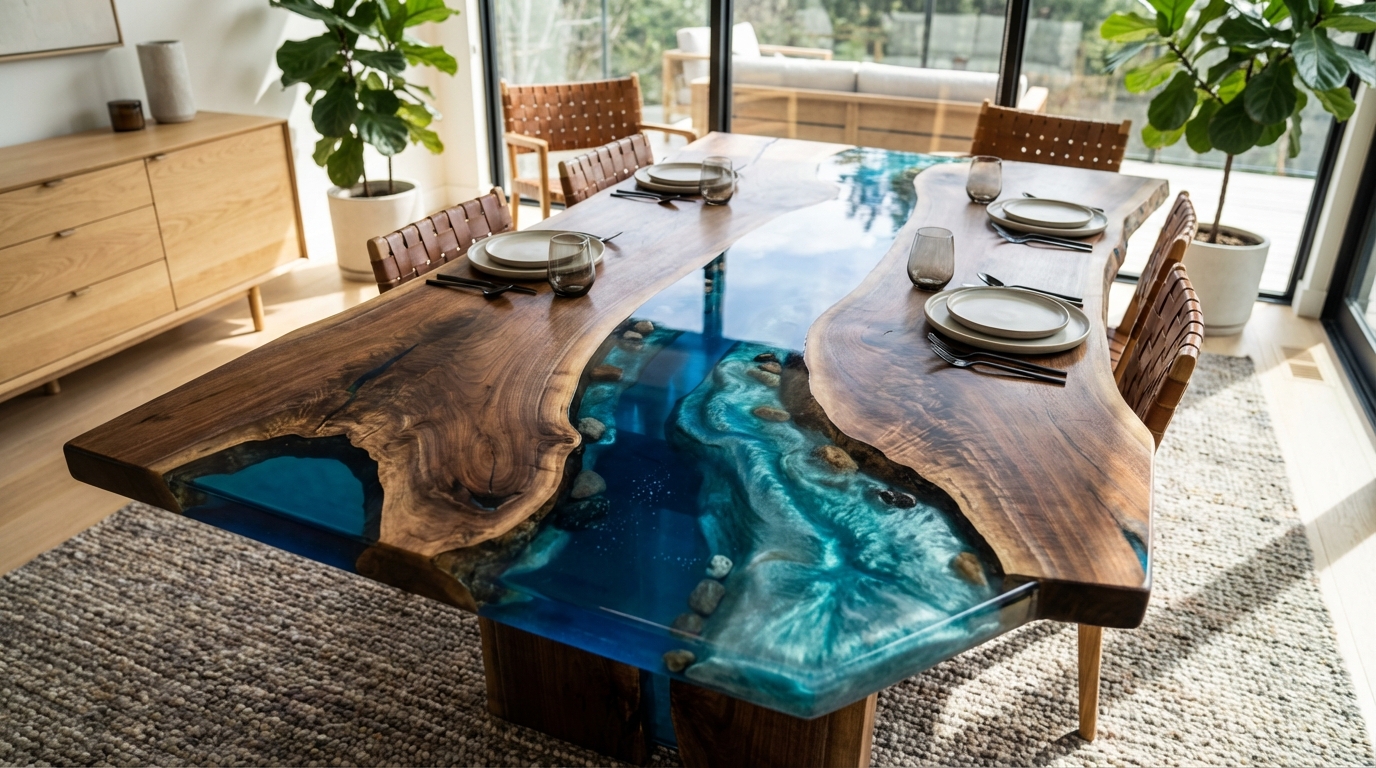
This is the design that launched the epoxy furniture revolution. The classic river table is a masterclass in contrasting textures.
The process involves taking a single, massive live-edge slab (often Black Walnut, Olive wood, or Maple), cutting it straight down the middle, and flipping the two halves so the straight, cut edges face the outside of the table, and the natural, winding, organic edges face inward toward each other. The gap between them creates a “canyon.”
This canyon is filled with resin. Artists have two distinct paths here:
- The Translucent River: Using alcohol inks or specialized liquid dyes, the resin is tinted just enough to give it color (usually a glacial blue or emerald green) while remaining entirely see-through. When light hits the table, it illuminates the jagged, organic edges of the wood suspended deep within the plastic.
- The Opaque Metallic River: Using mica powders (finely ground, shimmering minerals), the resin is turned into an opaque, swirling, metallic liquid. Just before the resin begins to set, the artist swirls the liquid with a stick, creating permanent, dynamic waves that look like flowing liquid metal or a stormy sea trapped in time.
2. The Hyper-Realistic Ocean and Beach Table
You do not need to live near the coast to capture the dynamic, soothing beauty of the sea. One of the most visually striking resin trends is the ocean table, often used for coffee tables or patio furniture.
Unlike the slow, deep-pour process of a river table, wave art on a table requires pouring multiple thin layers. The artist often starts with a base of beautiful, light-colored wood like Maple or Ash to represent the sandy beach. Some artists even mix real beach sand, crushed shells, and tiny pebbles into a clear resin base layer.
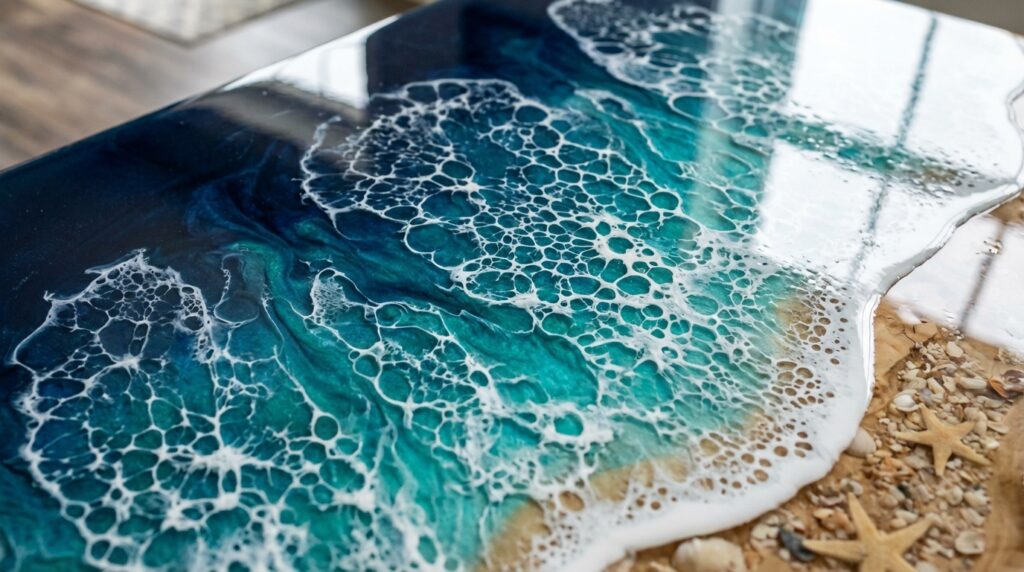
The ocean illusion is built horizontally. The artist lays down ribbons of dark navy blue resin at the far end of the table. Moving toward the “shore,” the colors transition to teal, turquoise, and finally clear resin over the natural wood to represent shallow water.
The Science of the Foam: The true hallmark of an ocean table is the seafoam. This delicate, cellular, web-like white structure is known as “lacing.” To achieve this, the artist mixes heavy titanium white pigment into a small batch of resin and lays a thin stripe right where the “water” meets the “sand.” Using a powerful industrial heat gun, they blow the white resin horizontally over the wet blue resin. The heat lowers the viscosity, and the heavy white pigments sink through the lighter blue pigments, physically breaking apart into organic, interconnected cells that perfectly mimic the foam left behind by a receding tide.
3. The Botanical Encapsulation Table
There is a long history of humanity attempting to preserve the fragile beauty of flora. But nothing captures the three-dimensional, vivid reality of nature quite like a botanical resin table. Imagine a massive dining table where the center is a crystal-clear block of glass, suspending an entire ecosystem of ferns, autumn leaves, dried roses, and mushrooms.
This is arguably the most difficult table to build because of one fundamental rule of chemistry: Resin and water are mortal enemies.
If you take fresh flowers and pour resin over them to make a table, the results will be disastrous. The water inside the plant’s cells will react with the curing chemicals, causing cloudiness. Worse, because the resin seals the flora off from the air, the organic matter will slowly rot and decompose inside the solid plastic, turning into a brown, mushy mess within a few weeks.
To build a botanical table, the flora must be ruthlessly dried while maintaining its shape. Artists bury the flowers in extremely fine silica gel sand for weeks. The sand pulls every microscopic drop of moisture out of the petals without crushing them.
When pouring the table, the artist must pour in multiple, thin layers. If they poured the entire table at once, the dried flowers would simply float to the top. They pour a half-inch base layer, let it get sticky, place the flowers down to lock them in, and then pour the next layer over them, slowly building up the thickness over a week until the botanicals are trapped forever in a clear, structural void.
4. The Geode and Crushed Crystal Table
Inspired by natural rock formations, geode tables are designed to look like massive cross-sections of ancient, sparkling stones. These are heavily favored in luxury interior design and high-end corporate boardrooms.
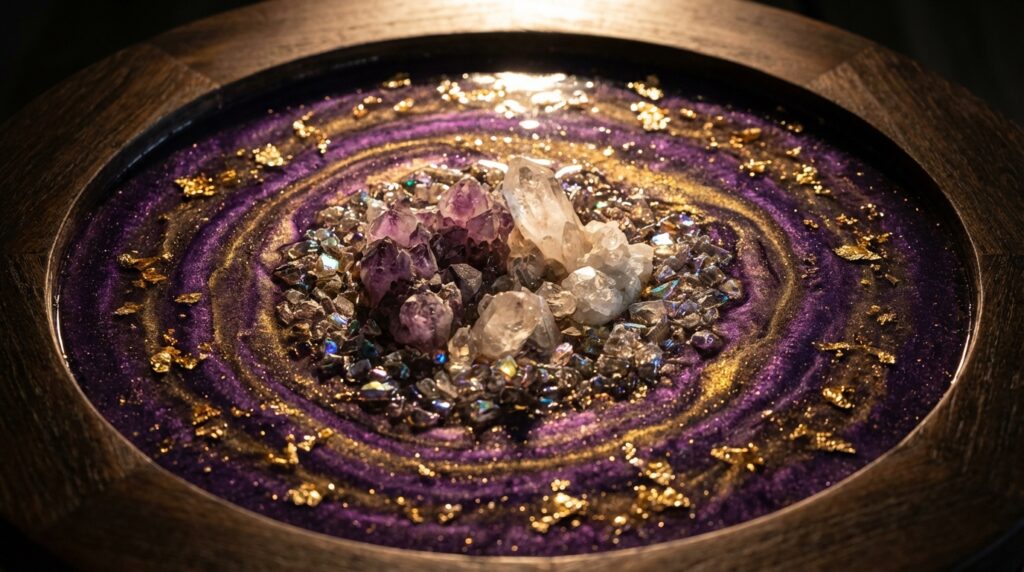
Building a geode table is a free-flowing, intuitive process. Instead of a single river, the artist creates a void in the center of the wood and maps out the “veins” of a geode using raw, physical materials.
- Crushed Fire Glass: Reflective shards of tempered glass create dense, sparkling outer rings.
- Real Quartz and Amethyst: Large, raw points of clear quartz or purple amethyst are embedded into the center of the table.
- Gold Leaf: Metallic flakes are embedded to catch the ambient light of the room.
The resin is tinted with various shades of translucent and opaque colors and poured in concentric rings around these textured areas. Because the resin naturally self-levels, the rings gently bleed into each other, creating the smooth, banded look of agate stone. The final result is a heavy, highly textured table that glitters brilliantly under a dining room chandelier.
5. The “Galaxy” or Deep Space Table
For those who prefer a darker, more modern aesthetic, the galaxy table is a masterpiece of specialized pigments. Instead of mimicking earth-bound elements like water or stone, these tables simulate the cosmos.
The wood chosen is often a dark, rich species like Black Walnut or even wood that has been artificially blackened using a Japanese burning technique called Shou Sugi Ban.
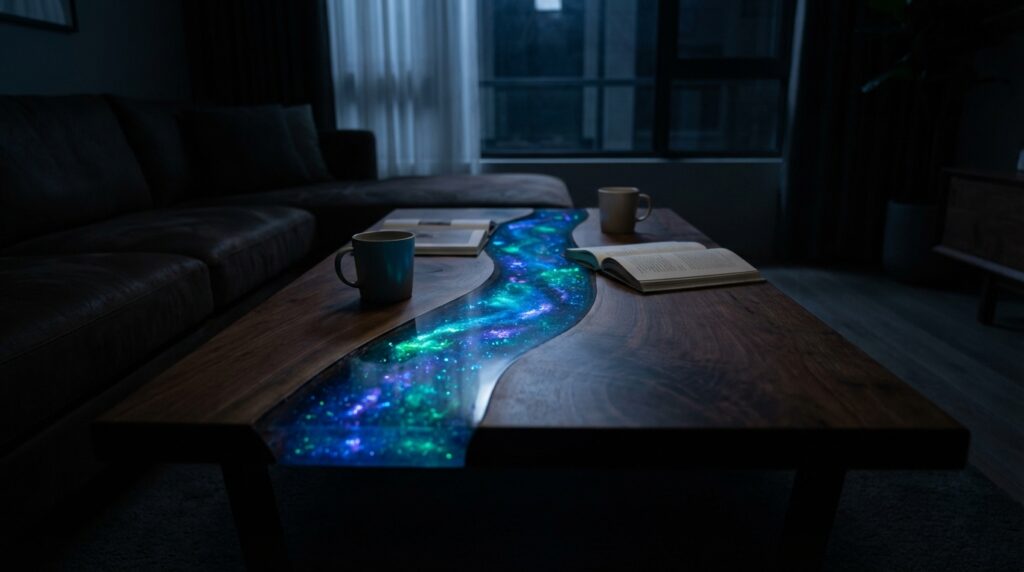
The resin is tinted with absolute black dyes, deep violet mica powders, and swirling, color-shifting interference pigments that change color depending on the angle you view them from.
The secret weapon of the galaxy table, however, is Strontium Aluminate. This is a highly advanced, rare-earth glow-in-the-dark powder. The artist mixes this powder into the resin and flickers it through the “river” in tiny specks to simulate distant stars, alongside larger swirls to simulate nebulas. During the day, the table looks like a swirling storm of dark purples and blacks. But when the lights go out, the table literally glows in the dark, emitting a soft, ethereal blue or green light for hours, transforming the dining room into a deep space observatory.
6. The Encased Object “Bar Top” Table
While live-edge river tables dominate the high-end market, there is a beloved, deeply personalized category of resin tables often found in game rooms, man caves, and commercial bars: the encased object table.
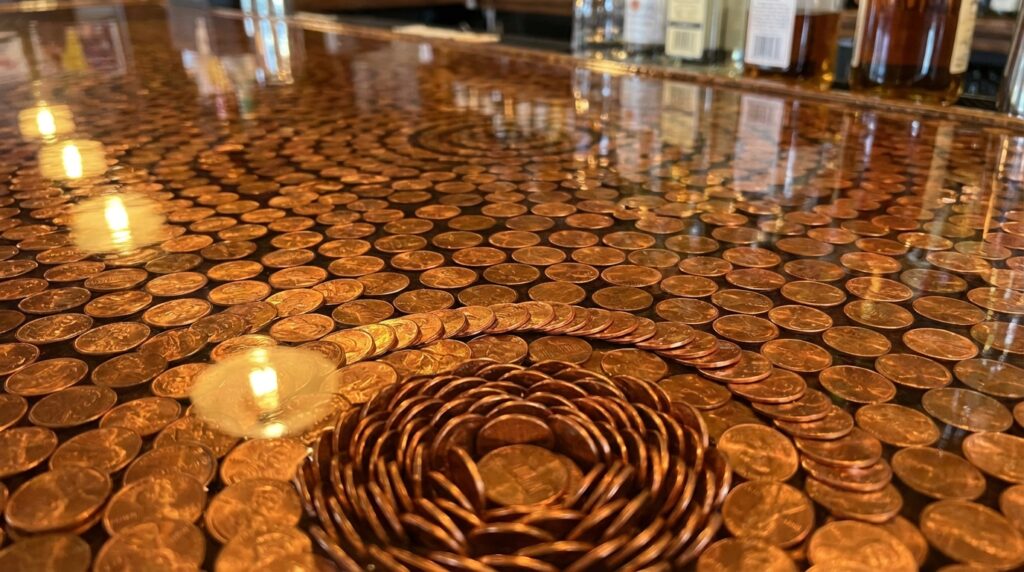
Instead of a deep pour between two slabs of wood, this table utilizes a piece of plywood or standard lumber with a raised wooden lip around the edge. The creator then painstakingly arranges hundreds or thousands of small, flat objects across the surface.
- The Penny Table: Thousands of copper pennies glued down in geometric patterns.
- The Bottle Cap Table: A mosaic of craft beer caps.
- The Sentimental Table: Concert tickets, playing cards, polaroid photos, and map clippings.
Because these objects contain air (especially underneath bottle caps) or are made of porous paper, they must first be painted with a sealant like Mod Podge. If they aren’t sealed, they will release millions of tiny air bubbles into the resin, ruining the clarity.
Once sealed, a “flood coat” epoxy is used. This is a thinner, fast-curing epoxy that is poured directly over the entire surface, burying the objects under a quarter-inch of liquid glass. The result is an incredibly durable, waterproof, scratch-resistant table that acts as a functional scrapbook.
The Dark Side of the Pour: When Table Projects Fail
No honest discussion of epoxy tables is complete without acknowledging how incredibly finicky and frustrating the medium can be. Epoxy resin is unforgiving, and the internet is full of heartbreaking videos of $2,000 table projects ending in disaster.
Here are a few of the infamous catastrophes that table-makers work tirelessly to avoid:
- The Sticky Mess (Soft Cure): If the resin is not mixed thoroughly enough (artists must scrape the sides and bottom of their mixing buckets repeatedly), unmixed pockets of the chemical will remain. Weeks later, the table will look finished, but touching it will reveal soft, tacky spots that will never, ever harden. The only fix is to literally carve the gooey mess out with a chisel and pour again.
- The Dust Contamination: A resin table takes days to cure. During that time, the surface is essentially a giant flypaper trap. If the shop is not impeccably clean, dust, sawdust, dog hair, or actual insects will land on the table and become permanently entombed in the top layer, requiring hours of sanding to remove.
- Amine Blush: If the working environment is too cold or too humid during the curing process, moisture in the air will react with the hardener as it cures on the surface. This creates a waxy, greasy, cloudy film on the top of the table called amine blush, which ruins the glossy finish.
These immense challenges and risks are exactly why custom resin tables are so highly valued and carry such premium price tags. Achieving a perfectly flat, clear, bubble-free, glass-like finish on a massive dining table is a testament to the artisan’s patience, environmental control, and scientific precision.
The Future of Resin Furniture: Eco-Friendly Alchemy
As the popularity of epoxy resin tables continues to soar, the woodworking industry is facing valid questions about sustainability. Traditional epoxies are petroleum-based, meaning they rely heavily on fossil fuels. Furthermore, once epoxy cures into its hard plastic state, it cannot be melted down and recycled like aluminum or glass.
However, the future is looking remarkably bright for eco-conscious creators and consumers. Chemical engineers are rapidly developing and perfecting Bio-Resins.
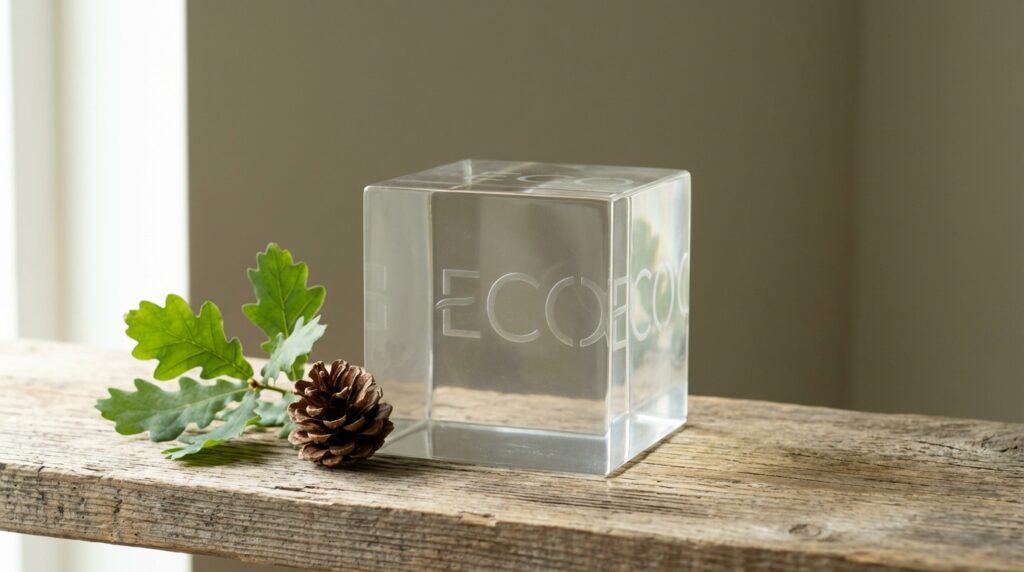
These modern, cutting-edge formulas replace a significant portion of the petroleum-based ingredients with renewable, bio-based materials. They utilize derivatives from pine oils, soybean oils, and even recycled vegetable waste from the restaurant industry.
Today’s high-end bio-resins are finally matching traditional epoxies in structural strength, optical clarity, and UV resistance (preventing the table from turning yellow over time when exposed to sunlight). This allows woodworkers to create the same breathtaking river tables, ocean coffee tables, and glowing galaxy desks with a significantly reduced carbon footprint.
Conclusion: More Than Just Furniture
An epoxy resin table is far more than just a place to eat dinner or set your coffee cup. It is a functional sculpture born from the marriage of raw nature and complex chemistry. It requires the builder to be equal parts lumberjack, chemist, sculptor, and mechanic.
Whether it is preserving the fragile beauty of dried wildflowers, simulating the crushing depths of the ocean, or simply highlighting the chaotic, beautiful edge of an ancient walnut tree, epoxy resin has forever changed the way we look at furniture. It turns the ordinary act of building a table into a true act of modern alchemy.