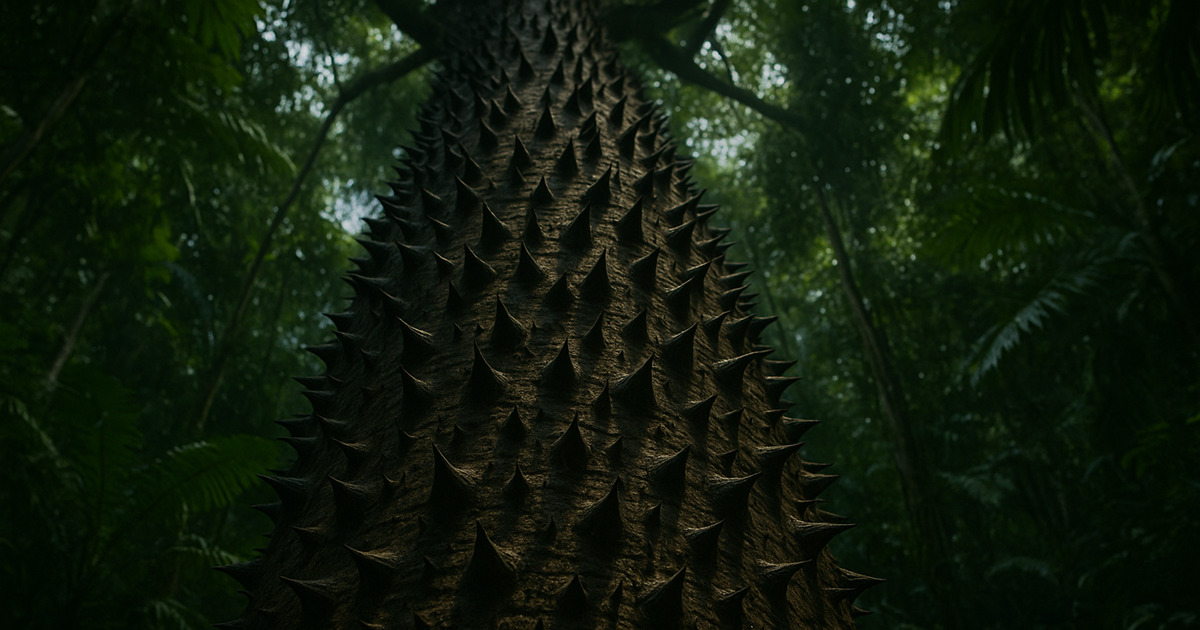
When we think of trees, we think of peaceful, shady giants that provide oxygen and wood. We don’t usually think of “shrapnel” or “explosions.”
But deep in the tropical forests of the Americas, there is a tree that chose violence.
It is called the Sandbox Tree (Hura crepitans), but the locals have a much more fitting name for it: The Dynamite Tree. From its poisonous sap to its grenade-like fruit, this is arguably the most dangerous tree on the planet.
Here is the story of the tree you should never, ever stand under.
1. It Is Covered in Armor
You can identify a Dynamite Tree instantly by its bark—or rather, its lack of it.
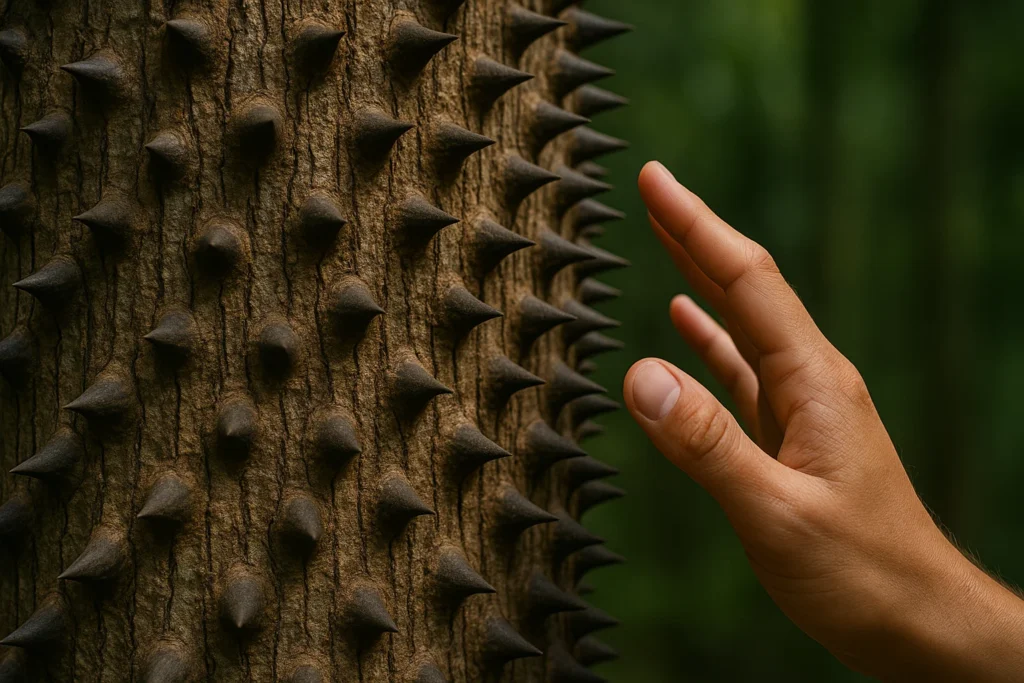
The entire trunk is covered in sharp, conical spikes that look like medieval torture devices. These spikes are densely packed from the roots all the way up the branches.
This defense mechanism earned it another nickname: the “Monkey No-Climb” tree. Not even a monkey (or a jaguar) is brave enough to scale it, meaning the tree is safe from almost any climber that wants to eat its leaves.
2. The Fruit Explodes at 160 MPH
The tree gets its “Dynamite” name from its reproductive cycle.
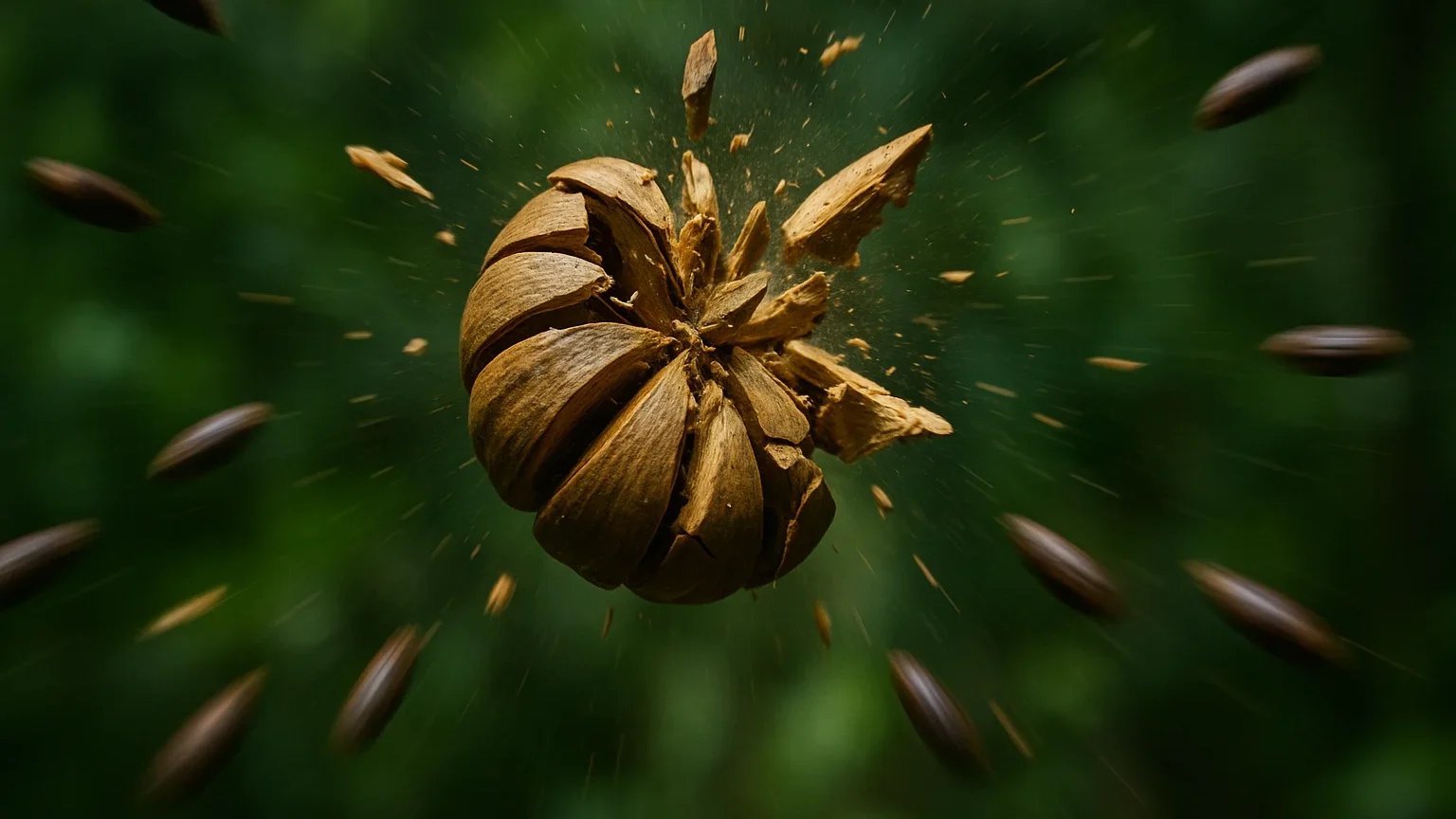
Most trees drop their seeds gently to the ground. The Sandbox Tree treats its seeds like bullets. Its fruit looks like a small pumpkin. As it dries out, tension builds up inside the shell until it can no longer hold it.
BOOM.
The fruit explodes with a loud crack that sounds like a gunshot. It launches its hard, flat seeds at speeds of up to 160 mph (257 km/h).
- The Range: The shrapnel can fly up to 330 feet (100 meters) away.
- The Danger: These flying seeds are strong enough to break glass or injure people and livestock standing nearby.
3. The Sap Can Blind You
If the spikes and the explosions weren’t enough, the tree utilizes chemical warfare, too.
The sap of the Dynamite Tree is highly toxic. In the Caribbean, fishermen traditionally used the milky sap to poison fish in streams, making them easy to catch.
For humans, contact with the sap causes a nasty red rash. But if you get it in your eyes? It causes strictly painful inflammation and can lead to temporary or permanent blindness.
4. Why Is It Called the “Sandbox” Tree?
With all these terrifying features, its official name seems remarkably boring.
It is called the “Sandbox Tree” because of a polite habit from the 1800s. Before ballpoint pens existed, people wrote with quills and ink. To dry the ink quickly, they would sprinkle fine sand over the paper.
The un-exploded fruit pods of this tree were the perfect shape to hold this sand. So, people would hollow out the dangerous grenades and use them as desktop “sand boxes.”
Conclusion
Nature is usually beautiful, but sometimes it is brutal. The Dynamite Tree is a perfect example of evolutionary overkill. It didn’t just want to survive; it wanted to make sure that anything touching it would regret it immediately.
So, if you are hiking in the Amazon and hear a loud crack, duck. It might just be a tree trying to shoot you.
Love dangerous nature? Read about the Real Wolverine or explore our Nature category for more biological oddities.




One Comment on “The Dynamite Tree: This Plant Explodes Like a Hand Grenade”