Agatha Christie is the best-selling novelist of all time, famous for writing uncrackable mysteries like Murder on the Orient Express. But in the winter of 1926, she didn’t just write a mystery—she became one.
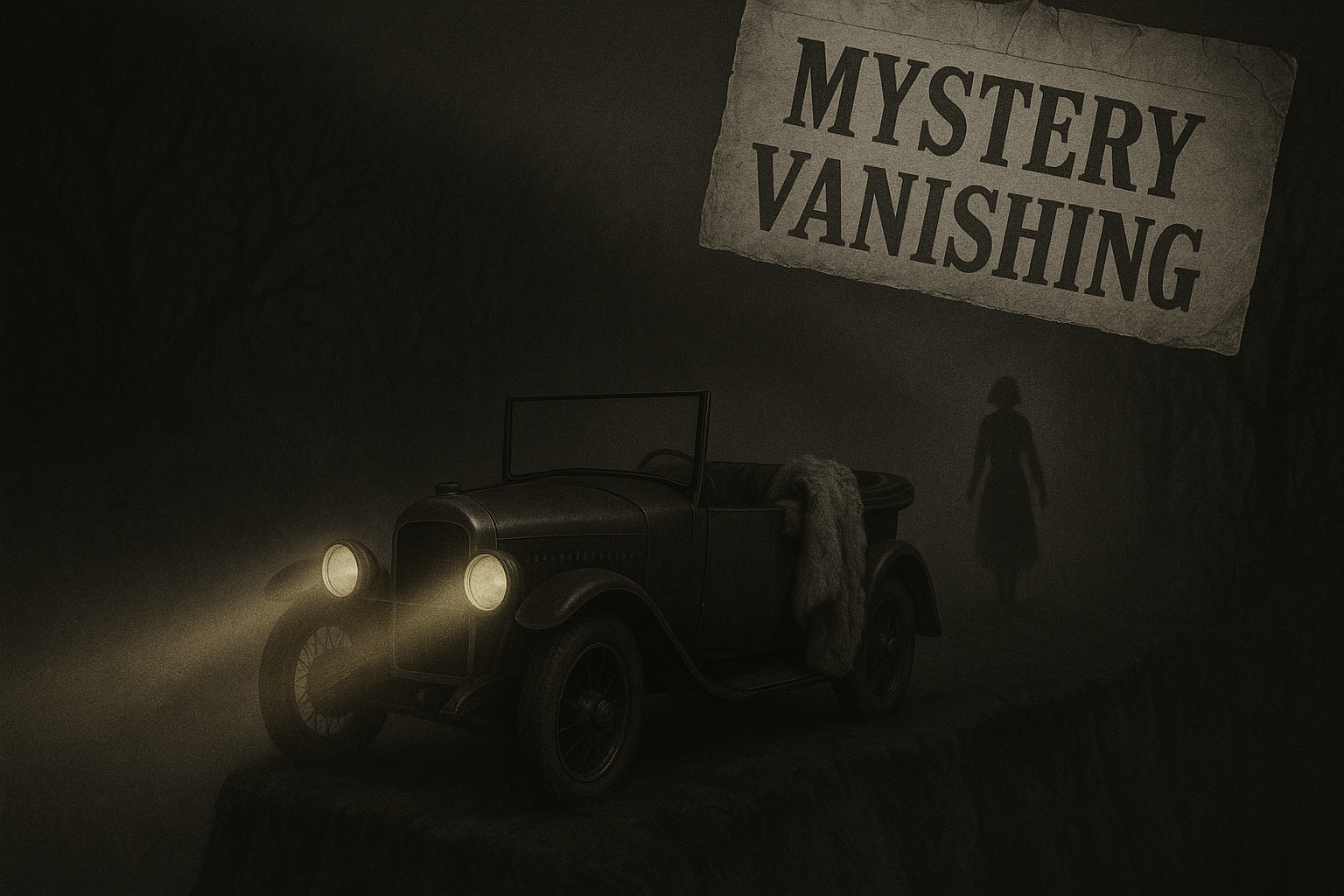
On a freezing December night, the “Queen of Crime” walked out of her house, drove her car into the darkness, and vanished off the face of the earth.
For 11 days, the world held its breath. Was she murdered? Was it a publicity stunt? Or was she trying to frame her husband for a crime he didn’t commit?
Here is the true, unsolved story of Agatha Christie’s 11 missing days.
1. The Betrayal That Started It All
By 1926, Agatha Christie was already a literary star, but her personal life was crumbling. Her mother had recently died, sending her into a deep depression.
Then, the final blow came. Her husband, Archie Christie, a handsome WWI pilot, asked for a divorce. He confessed he had fallen in love with a younger woman named Nancy Neele.
On the night of December 3, 1926, Archie and Agatha had a massive fight. Archie stormed out to spend the weekend with his mistress. Left alone, Agatha kissed her sleeping 7-year-old daughter goodbye, wrote a confusing letter to her secretary saying she was “going to Yorkshire,” and drove away in her Morris Cowley.
2. The Abandoned Car
The next morning, Agatha’s car was found abandoned on a steep slope at Newlands Corner in Surrey. It had crashed through a hedge and stopped just before rolling into a deep chalk pit.
The scene looked staged. The headlights were left on. Her fur coat and driver’s license were inside. But there was no sign of Agatha.
The police immediately suspected foul play. Had the cheating husband murdered his famous wife? Or had she driven into the silent pool nearby to end her own life?
3. The Sherlock Holmes Search
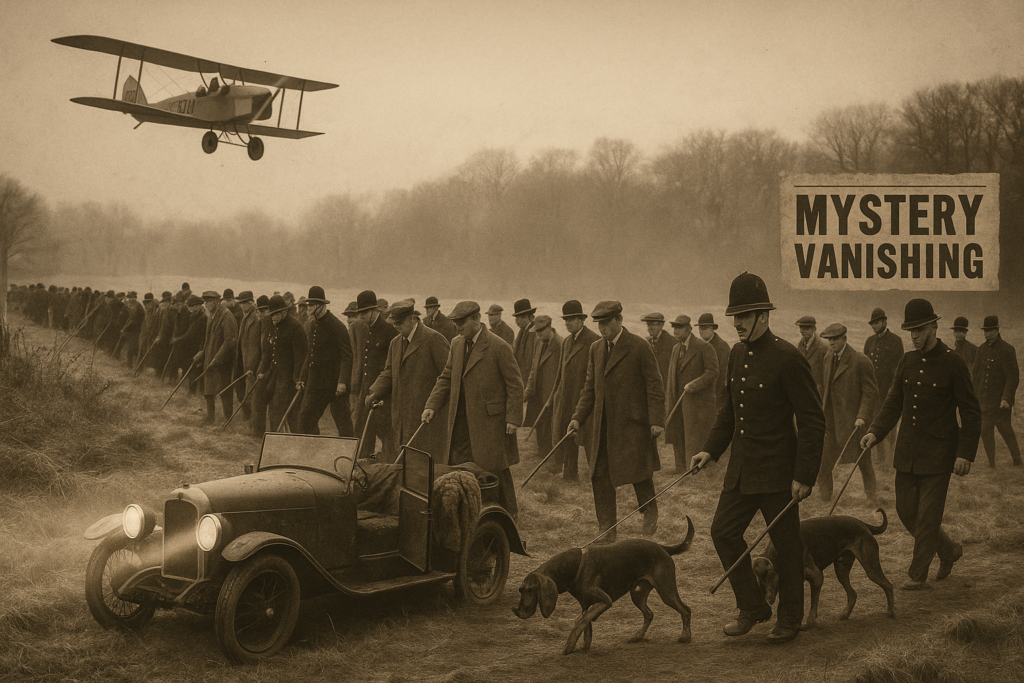
The disappearance caused a media frenzy. It was the first time in history that aeroplanes were used to search for a missing person. Over 1,000 police officers and 15,000 volunteers scoured the countryside.
Desperate for answers, the authorities even turned to other mystery writers.
- Sir Arthur Conan Doyle (creator of Sherlock Holmes), a believer in the occult, took one of Agatha’s gloves to a psychic medium to see if she was still alive.
- Dorothy L. Sayers (author of Lord Peter Wimsey) visited the crash site to look for clues the police might have missed.
Despite the star power, no one could find a trace of her.
4. The Strange Discovery
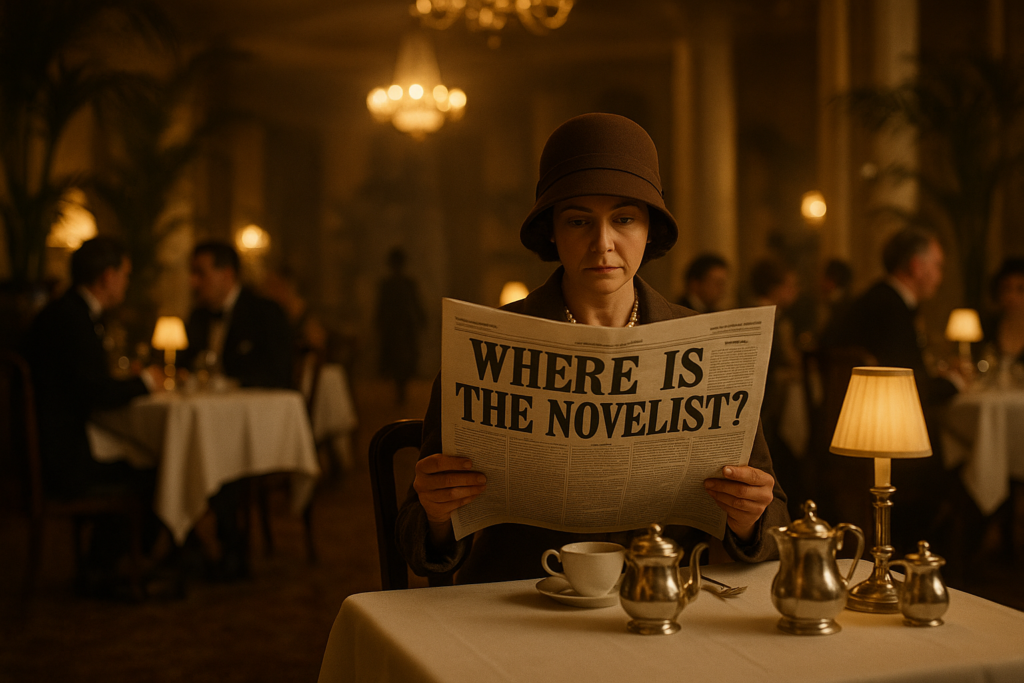
On December 14, eleven days after she vanished, a banjo player at the Swan Hydropathic Hotel in Harrogate (hundreds of miles away) noticed a guest who looked eerily familiar.
Police raided the hotel and found Agatha Christie safe and sound. She was sitting in the dining room, calmly reading a newspaper report about her own disappearance.
But here is the twist: She hadn’t checked in as Agatha Christie. She had signed the register as “Teresa Neele”—using the surname of her husband’s mistress.
5. Amnesia or Revenge?
When her husband arrived to collect her, Agatha claimed she had no idea who he was. Doctors diagnosed her with a fugue state (a rare form of amnesia caused by trauma). She claimed she had lost her memory after the car crash and didn’t remember anything about the past 11 days.
However, the public wasn’t convinced. Many theories emerged:
- The Revenge Theory: Agatha staged the disappearance to terrify Archie and make the police suspect him of murder—the ultimate punishment for his affair.
- The Publicity Stunt: Some cynics believed she did it to boost sales of her latest book, The Murder of Roger Ackroyd.
Agatha Christie divorced Archie two years later and eventually remarried. Until the day she died in 1976, she never spoke about the incident again. It is not even mentioned in her autobiography.
Conclusion
We may never know what truly happened in those 11 days. Did the Queen of Mystery suffer a mental breakdown, or did she pull off her greatest plot twist in real life?
One thing is certain: checking into a hotel using the name of the woman who ruined your marriage is a level of petty genius that only Agatha Christie could invent.
Love a good mystery? Check out our Mysteries category for more unsolved cases, or read about other People who lived extraordinary lives.