Imagine the worst happens. A nuclear war, an asteroid strike, or a runaway climate collapse wipes out our crops. Where does humanity go to hit “Restart”?
We go to a tiny, frozen island halfway between Norway and the North Pole.
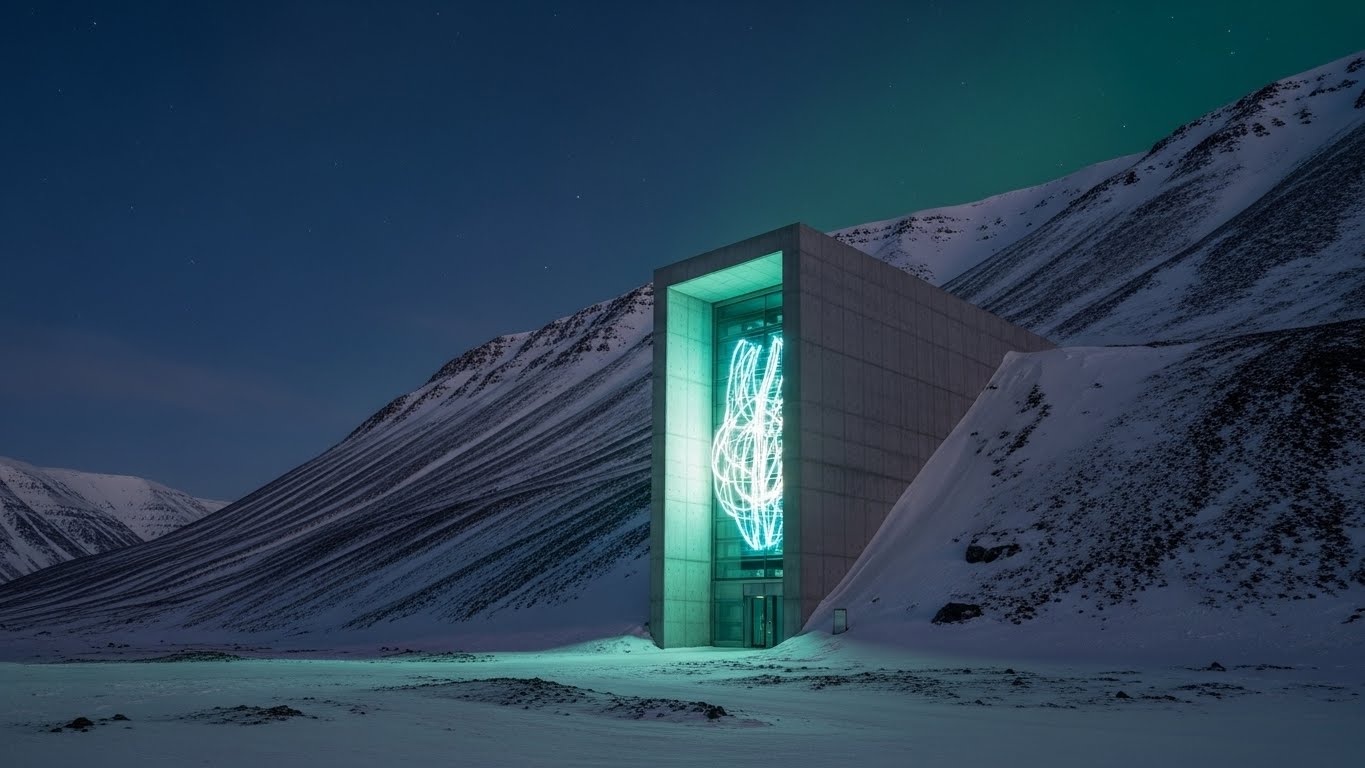
There, jutting out of the snow like a futuristic monolith, is the entrance to the Svalbard Global Seed Vault. It is often called the “Doomsday Vault,” and it is one of the most important—and secure—buildings on Earth.
Here is the interesting story of the room that holds the backup copy of human civilization.
1. The Location: Why There?
The Vault isn’t just “in the snow.” It is located on the island of Spitsbergen in the Svalbard archipelago.
- It’s Cold: The vault is buried 120 meters (390 ft) inside a sandstone mountain. Even if the power fails, the surrounding permafrost acts as a natural freezer, keeping the seeds at -18°C (-0.4°F) for decades.
- It’s Stable: The area is geologically dead (no earthquakes) and is well above sea level, meaning it is safe even if the ice caps melt.
- It’s Safe: Svalbard is a demilitarized zone by international treaty. Plus, the island is home to more Polar Bears than people, making it naturally guarded.
2. What is Inside? (The “Black Box”)
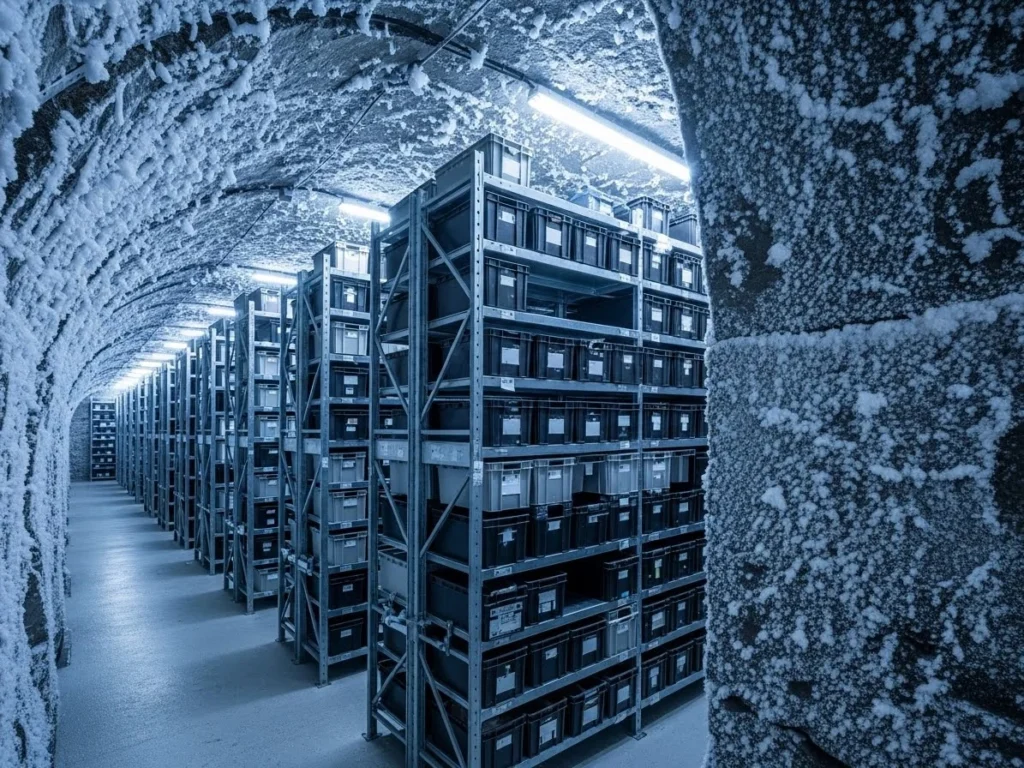
Access is strictly forbidden to the public. If you were to walk through the 100-meter long tunnel and pass the blast-proof doors, you would find three massive halls.
Inside are shelves stacked with simple plastic boxes. These boxes contain over 1.2 million seed samples from almost every country on Earth.
- North Korea has deposited seeds here.
- The US has deposited seeds here.
- Ukraine has deposited seeds here.
It is one of the few places in the world where enemies sit side-by-side on a shelf, united by the goal of survival.
3. The First “Withdrawal” (It Actually Worked)
Many people think the vault is just for a distant apocalypse. But in 2015, the vault was opened for a rescue mission.
The Syrian Civil War had destroyed the main seed bank in Aleppo, which held ancient varieties of wheat and barley essential for desert agriculture. Scientists needed those seeds to continue their research to feed the Middle East.
They flew to Svalbard, unlocked the vault, and withdrew the “backup” boxes that Syria had deposited years earlier. They planted the seeds in Lebanon and Morocco, multiplied them, and sent fresh seeds back to the Vault in 2017.
The system worked. The “Doomsday” backup saved a piece of history from being lost to war.
4. The Design: Art Meets Survival
The Vault is built to last 1,000 years, but it is also a piece of art. The Norwegian government requires all public construction projects to include art. For the Vault, artist Dyveke Sanne created an installation called Perpetual Repercussion.
The roof and entrance are covered in mirrors and highly reflective steel shards. In the dark Arctic winter, it reflects the Polar light. In the summer, it reflects the Midnight Sun. It serves as a beacon, signaling that something precious is hidden inside.
5. The Irony: The Vault is Leaking?
In 2017, the Vault faced a scare. The permafrost around the entrance began to melt due to record-high temperatures in the Arctic. Water flooded the entrance tunnel (luckily, it froze before reaching the seeds).
It was a terrifying irony: The vault designed to protect us from climate change was almost damaged by climate change. Since then, Norway has spent millions waterproofing the tunnel and installing giant cooling pumps to ensure the “Deep Freeze” stays frozen, no matter what happens outside.
Conclusion
The Svalbard Global Seed Vault is a symbol of hope. It is a place where humanity admits that we might fail, but we care enough about the future to pack a survival kit.
It is the ultimate insurance policy. As long as that concrete wedge stands in the snow, we have a second chance.
Fascinated by survival stories? Read about the Demon Core or explore our Places & Travel section.