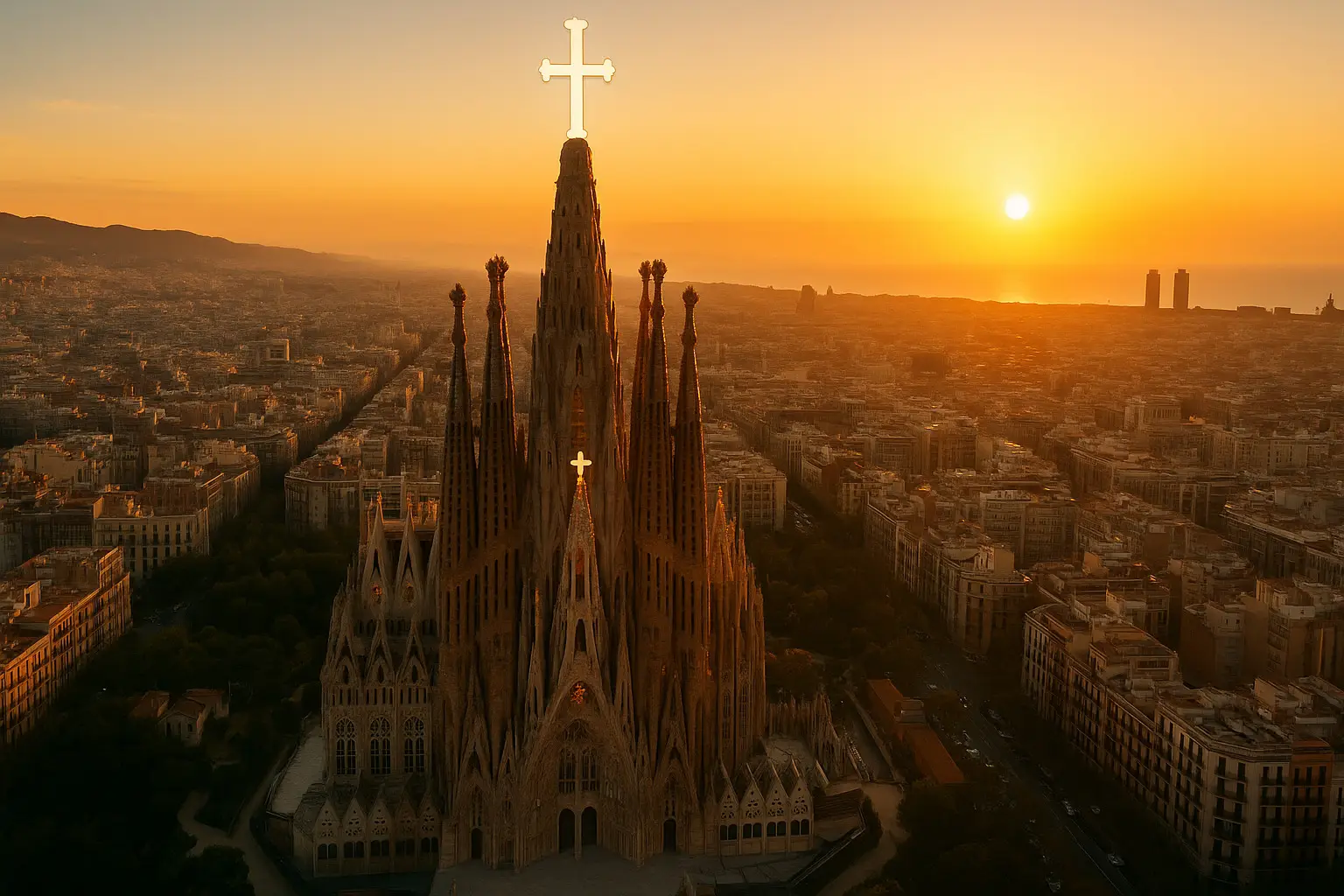
If you have ever visited Barcelona, you know the skyline is dominated by two things: the Mediterranean Sea and the construction cranes hovering over the Sagrada Família.
They have been there for longer than anyone alive today has been born.
Construction on this massive basilica began in 1882. To put that in perspective, when the first stone was laid, the Eiffel Tower didn’t exist, the lightbulb was a brand-new invention, and the Titanic wouldn’t set sail for another 30 years.
For over a century, it has held the title of “the world’s most beautiful unfinished building.” But in 2026, that title disappears.
To mark the 100th anniversary of the death of its visionary architect, Antoni Gaudí, the final stone of the central tower is scheduled to be set. Here is the incredible, turbulent story of the church that took 144 years to build.
1. The Architect Who Lived in His Workshop
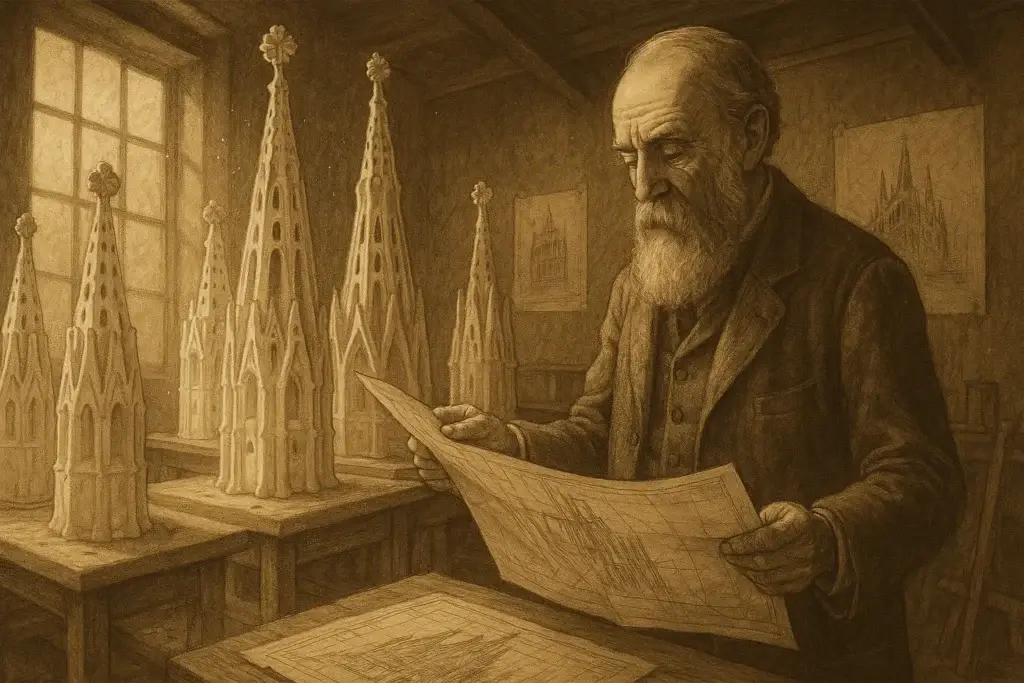
Antoni Gaudí didn’t start the project, but he certainly finished it (spiritually, at least). He took over in 1883 and scrapped the original, boring neo-Gothic design. Instead, he envisioned a “Naturalist” masterpiece—a church that looked like it had grown organically from the earth.
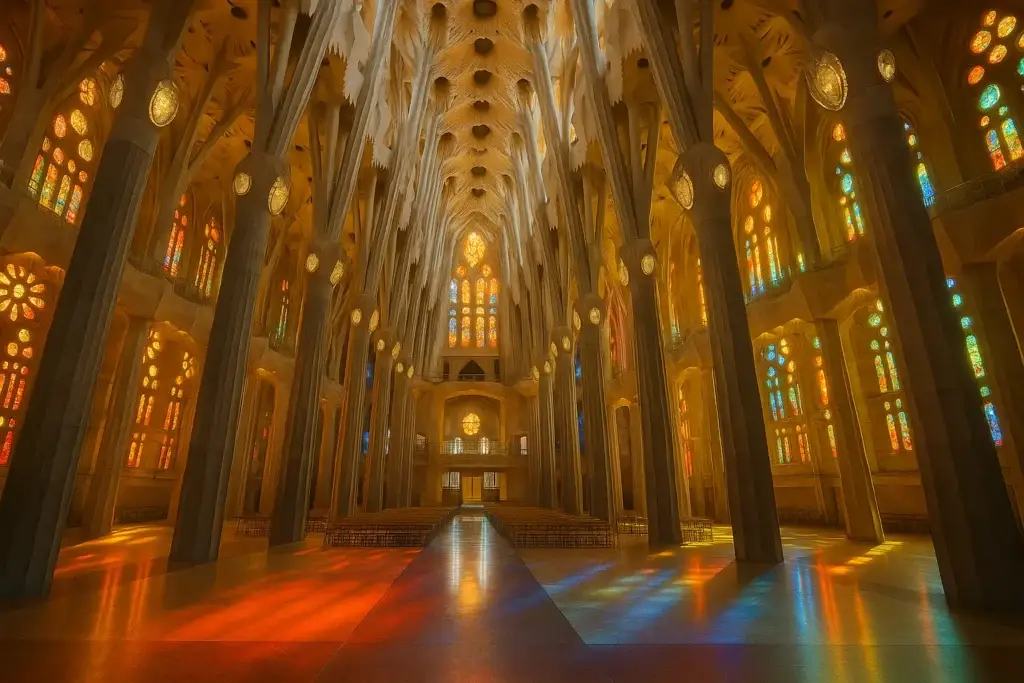
He designed columns that branch out like trees to hold up the ceiling, creating a “stone forest.” He used hyperboloid structures that had never been used in architecture before.
Gaudí became obsessed with the project. In his later years, he stopped accepting other work, refused to talk to the press, and actually moved into a small workshop inside the construction site. When people asked why it was taking so long, he famously replied:
“My client is not in a hurry.” (Referring to God).
Tragically, Gaudí never saw his vision realized. In 1926, he was hit by a tram while walking to confession. Because he was dressed in ragged clothes, nobody recognized him, and he was mistaken for a beggar. He died three days later. At the time, the church was only 25% complete.
2. The Anarchists Who Tried to Destroy It
The fact that the church is standing at all is a miracle. In 1936, during the Spanish Civil War, anarchists broke into the temple. They set fire to the crypt and burned Gaudí’s workshop.
This was a catastrophe. Gaudí didn’t work with traditional blueprints; he used massive, complex plaster models to show his team what to do. The anarchists smashed these models to pieces.
For decades after the war, architects had to piece the design back together from the smashed fragments, like solving the world’s hardest 3D jigsaw puzzle. In recent years, they have even used aeronautical engineering software and 3D printers to reverse-engineer Gaudí’s complex geometric shapes.
3. The Tower That Breaks Records (But Respects God)
The finishing touch in 2026 will be the completion of the massive Tower of Jesus Christ.
This central spire will soar to 172.5 meters (566 feet), making the Sagrada Família the tallest church building in the world, surpassing the Ulm Minster in Germany. It will be topped with a massive, four-armed cross that glows at night.
However, the height is very specific. Gaudí famously measured the height of Montjuïc (the highest mountain in Barcelona) and deliberately designed his tower to be exactly one meter shorter. His reasoning?
“The work of man should not be higher than the work of God.”
4. Funded by You (The Tourists)
One reason the construction took 144 years is that the Sagrada Família is an expiatory temple. This means it receives zero funding from the Spanish government or the Vatican. Every brick, stone, and stained glass window must be paid for by private donations.
For most of the 20th century, construction moved at a snail’s pace as donations trickled in. It was only with the explosion of modern tourism that the budget skyrocketed.
Today, millions of visitors buy tickets to tour the construction site every year. In a way, if you have visited Barcelona in the last 20 years, you are one of the builders who helped finish it.
Conclusion
When the final stone is placed in 2026, the cranes will finally come down. The skyline of Barcelona will change forever, completing a vision that started in the 19th century and survived wars, fires, and poverty to reach the 21st century.
It serves as a powerful reminder that great things take time. Sometimes, they take 144 years.
Fascinated by man-made wonders? Check out the Spirograph Table invention or explore our Architecture tag for more structural marvels.